Yak Milk
RareTibetan Plateau, Himalayas, and neighboring high-altitude regions of Central Asia
A rich, concentrated milk produced by yaks in high-altitude regions of Asia and used traditionally by herding communities.
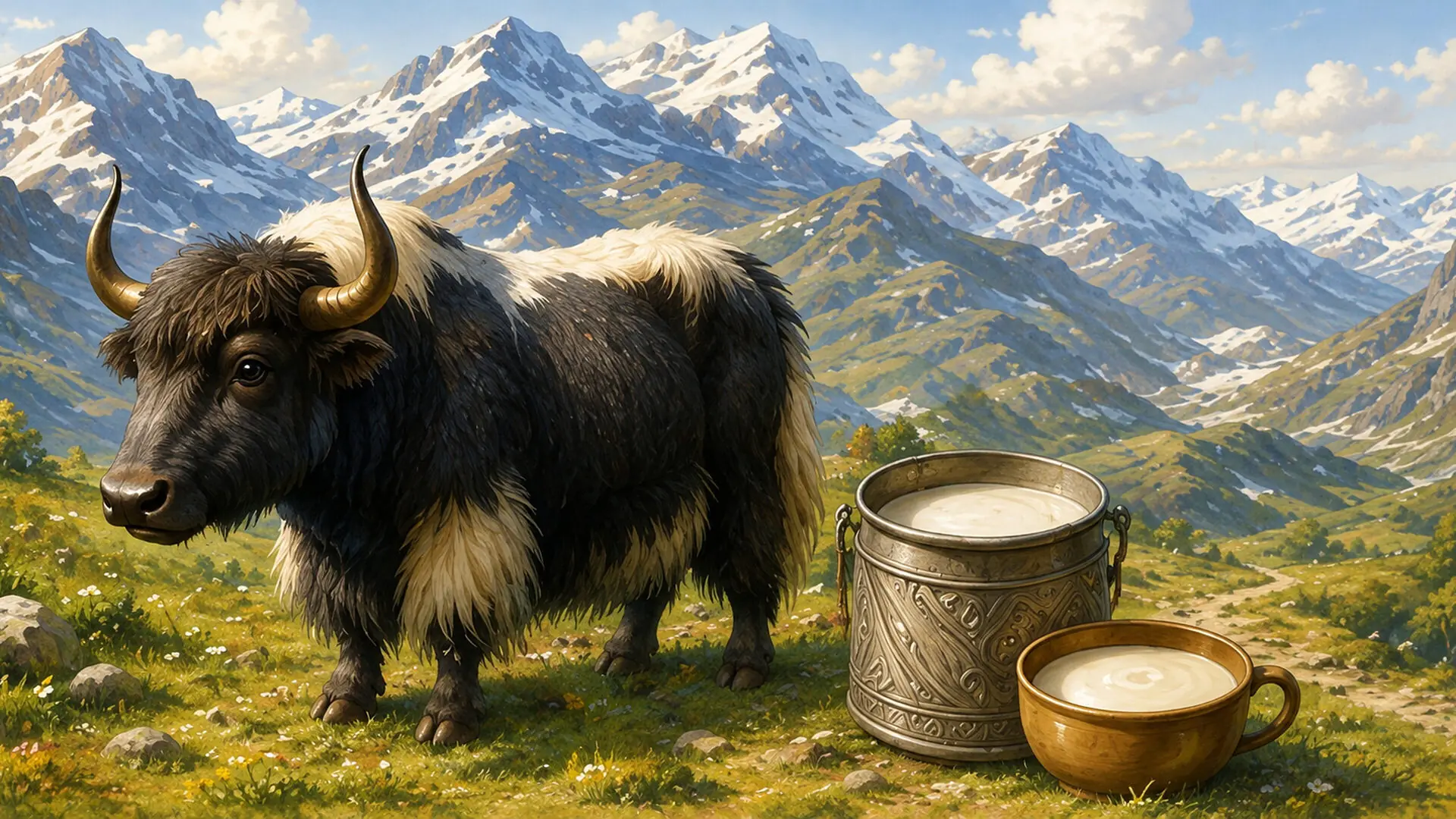


A rich, concentrated milk produced by yaks in high-altitude regions of Asia and used traditionally by herding communities.
Yak milk is produced by the domestic yak (Bos grunniens), a large bovine animal native to the Himalayan region of South Asia and the Tibetan Plateau. Yaks are herded at altitudes typically ranging from 3,000 to over 5,000 metres above sea level, in some of the harshest and most remote pastoral environments in the world. For the communities of Tibet, Bhutan, Nepal, Mongolia, Kyrgyzstan, and neighbouring highland regions, yaks are a central source of food, transport, fibre, and fuel.
Yak milk is notably richer than cow milk. Its higher fat content — ranging from 5.5% to over 9% depending on the season, lactation stage, and pasture quality — gives it a creamier, fuller flavour. The milk has a slightly sweet taste and a white to pale cream colour. Yaks produce considerably less milk than modern dairy cattle, typically yielding between 1 and 5 litres per day during the milking season, which makes yak milk and its products relatively precious commodities in the regions where they are produced.
Yak milk has been a dietary staple in Tibetan culture for centuries. It is consumed fresh and converted into butter, cheese (chhurpi in Nepal and Tibet), and fermented beverages. Yak butter tea (po cha), made by churning strong tea with yak butter and salt, is a culturally significant drink in Tibet and surrounding highland regions, providing warmth and calories in cold, high-altitude environments.
Yak milk is considerably richer than cow milk in fat and protein. Values vary significantly by season, lactation stage, and region. Typical ranges reported in research:
The high fat content makes yak milk an excellent source of energy, which is particularly important for communities living and working at high altitude in cold climates. Yak butter made from this rich milk is dense in calories and fat-soluble vitamins.
In Tibet and surrounding regions, yak butter (known as mar) is the primary fat used in cooking and is a key ingredient in po cha (butter tea). Chhurpi, a traditional hard yak cheese made in Nepal and Tibet, is produced in both soft and extremely hard varieties — the hardest form is chewed slowly over many hours and is sometimes called the hardest cheese in the world. Fermented yak milk drinks are also produced and consumed locally.