Llama Milk
Research LimitedAndean South America
Milk produced by female llamas. Llamas are not conventional dairy livestock, and scientific information about their milk is much more limited than for major dairy species.
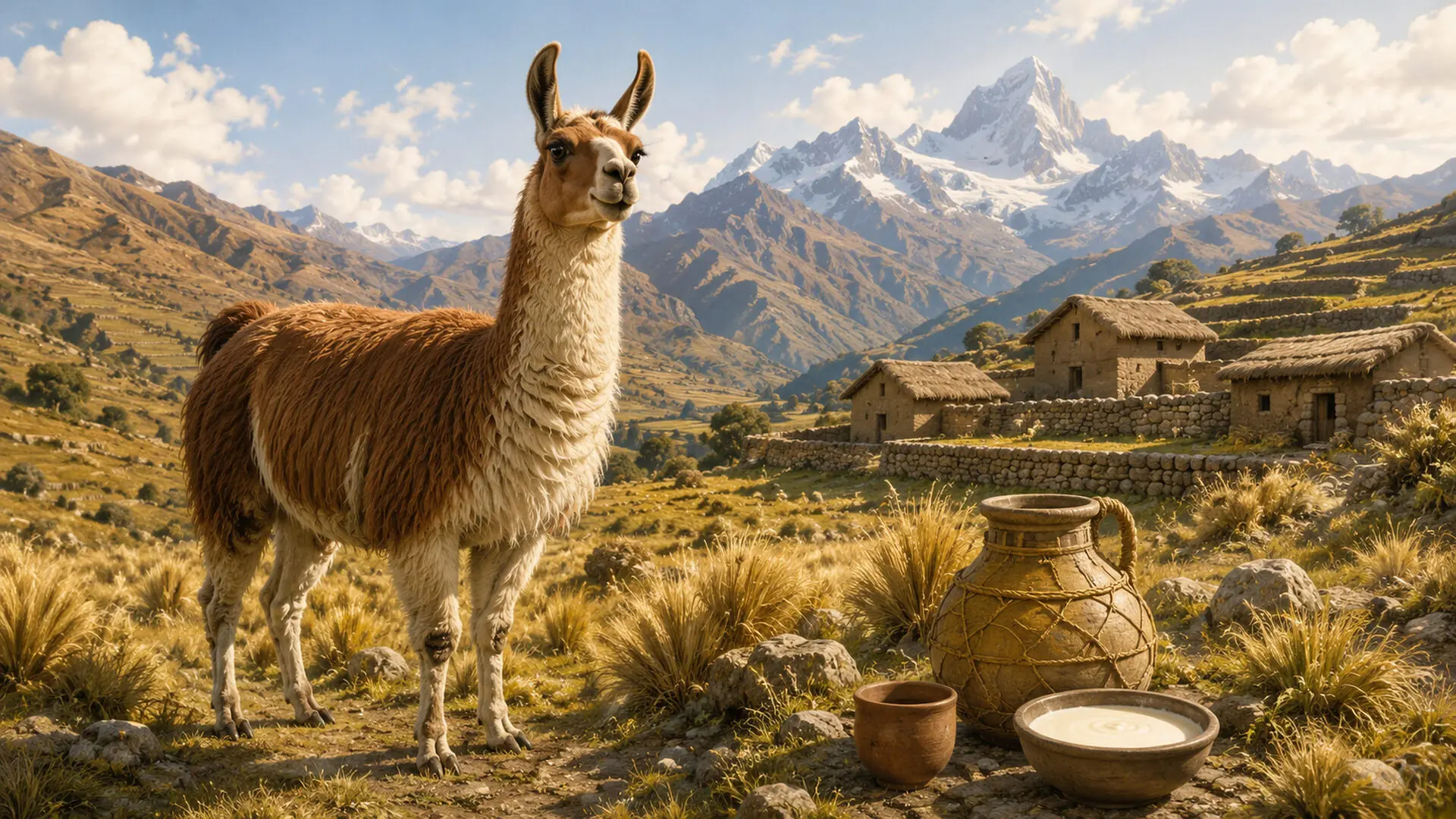






Milk produced by female llamas. Llamas are not conventional dairy livestock, and scientific information about their milk is much more limited than for major dairy species.
Llama milk is produced by the domestic llama (Lama glama), a South American camelid native to the Andean highlands of Peru, Bolivia, Chile, and Argentina. Llamas were domesticated from the wild guanaco (Lama guanicoe) approximately 4,000–5,000 years ago on the Andean altiplano. They were valued primarily as pack animals capable of carrying loads at high altitudes, and for their coarse fibre and meat, rather than as dairy animals. Llama milk is not commercially produced at any significant scale and is not a standard dairy product.
In Andean rural communities, some families have historically milked llamas to supplement food supply, particularly in remote highland areas. Llamas produce very limited quantities of milk — just enough to nurse their cria (single offspring) for approximately 6 months — and are not selectively bred or managed for dairy production. Published research on llama milk composition is limited and shows considerable variation: a controlled 27-week European study reported a mean of 4.70% fat; a large US-based study found 2.7% fat and described llama milk as lower in fat than domestic ruminant milks; while an Argentine study reported 3.43% fat. Protein averages around 4.0–4.4% across studies. The variation likely reflects differences in animal population, diet, lactation stage, and sampling method.
Llama milk shares some camelid characteristics with alpaca and guanaco milk — it is believed to be naturally homogenised (fat does not separate easily) and differs in its protein structure from bovine milk. However, blanket claims that llama milk is universally "richer in fat" than cow milk are not supported across the published literature — fat values range from 2.7% to 4.7% depending on the study, population, and lactation stage. Because commercial production does not exist, no standardised nutritional information is available for consumer labelling purposes.
Published nutritional data for llama milk is very limited due to the rarity of its collection for human consumption:
Llama milk composition varies across studies and lactation stage. Published figures include:
Published llama milk fat values range from 2.7% (lower than domestic ruminants, per a US study) to 4.7% (mean across 27 weeks, per a European controlled study). Protein is consistently around 4.0–4.4% and lactose around 5.9–6.5%. Fat increases with lactation stage in some studies but not all. The milk is produced primarily to nurse crias rather than for human consumption.
Llama milk is not commercially available for human consumption. In remote Andean communities, some families may utilise small amounts of llama milk as a supplementary food, but this is incidental to the animals' primary function as pack animals and fibre producers. Llamas are not milked commercially and no standardised llama dairy products exist in trade.