Donkey Milk
RareMediterranean Europe and other limited production regions
Milk produced by domestic donkeys. It is a low-fat, lactose-rich equine milk produced commercially only on a relatively small scale.
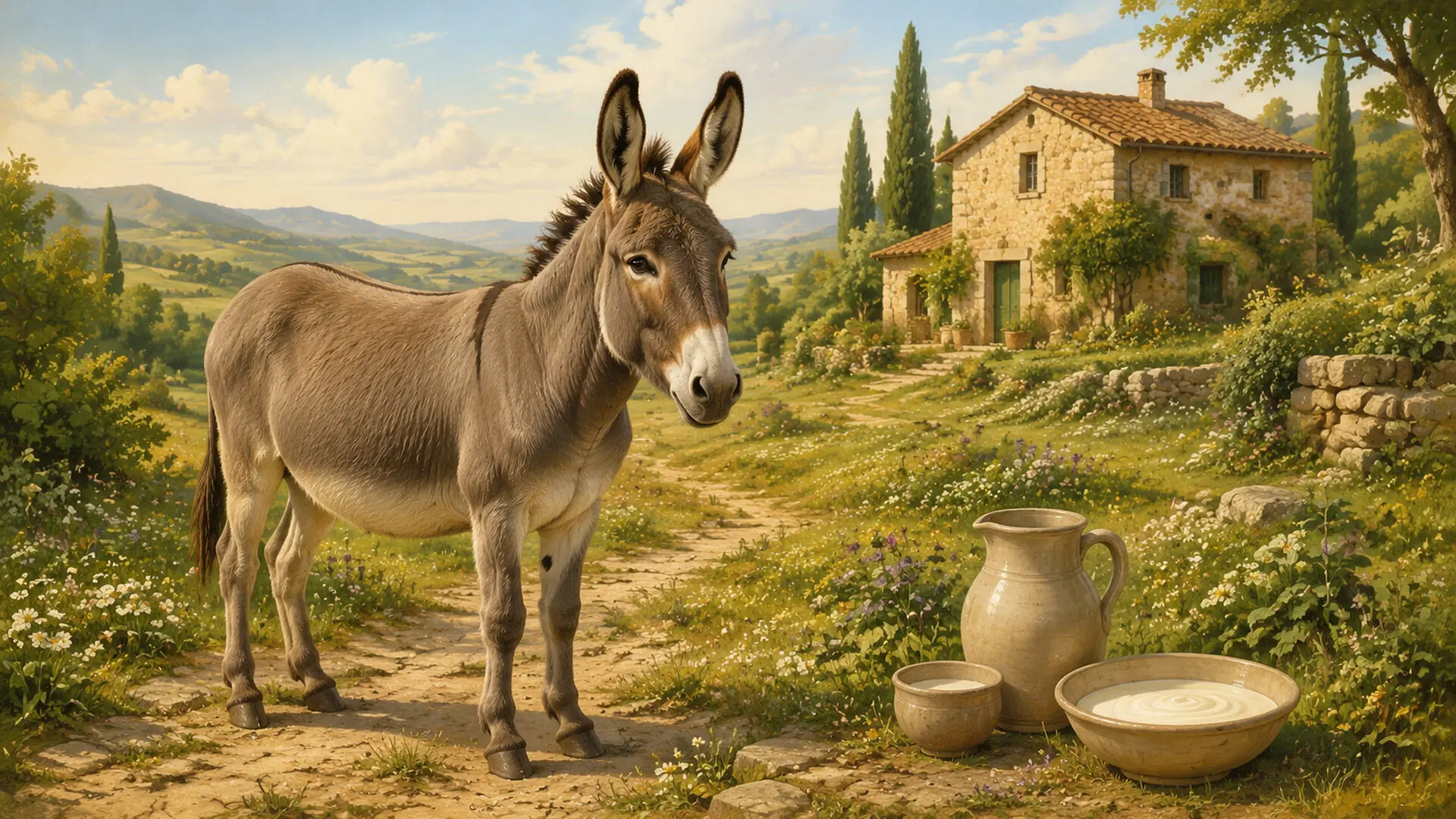




Milk produced by domestic donkeys. It is a low-fat, lactose-rich equine milk produced commercially only on a relatively small scale.
Donkey milk is produced by the domestic donkey (Equus asinus) and is one of the rarest commercially available animal milks in the world. Donkeys were domesticated in Northeast Africa approximately 5,000–7,000 years ago from the African wild ass, and spread throughout the ancient world as working animals. While donkeys have long been a part of farming communities globally, their milk has only recently attracted significant commercial interest, primarily in Europe.
Donkey milk is compositionally closer to human breast milk than cow milk is, with a similarly low fat content, a high proportion of whey proteins relative to caseins, and a lactose content comparable to human milk. This similarity has made it historically significant — it was used in ancient Rome and Greece as a substitute for human breast milk for infants when wet nurses were unavailable, and was reportedly used by Cleopatra in her famous beauty baths. Its high lactose content and specific protein structure mean it has a naturally sweet, pleasant flavour that many describe as mild and clean.
Donkeys produce very small quantities of milk — typically 0.5–1.5 litres per day — and only for a few months after foaling. This extremely low yield, combined with the difficulty of milking donkeys (who require their foal to be present to let down milk), makes donkey milk one of the most expensive dairy products in the world. A litre of fresh donkey milk can cost €10–€15 or more in European specialty markets. It is produced primarily in Italy, France, Serbia, and a few other European countries.
Donkey milk has a composition notably similar to human breast milk. Typical values:
Donkey milk is low in fat and relatively low in protein compared to cow milk. Its high lactose content gives it a naturally sweet flavour. It contains high levels of lysozyme, an antimicrobial enzyme also found in human milk. Its whey protein profile is different from cow milk and may be better tolerated by some people with cow milk protein sensitivities, though it still contains lactose.
Donkey milk is primarily consumed fresh as a drinking milk or as a freeze-dried powder that can be reconstituted with water. In Italy, it has been used as a specialty infant formula for babies with cow milk protein allergy under medical supervision. Donkey milk soap and skincare products are a growing commercial category, marketed for the milk's high vitamin and lipid content. Small-scale artisan cheesemakers in Italy (notably in Piedmont) have produced donkey milk cheese, including Pule — reportedly one of the most expensive cheeses in the world.