Reindeer Milk
Very RareNorthern Fennoscandia and northern Eurasia
An unusually concentrated milk produced by reindeer, traditionally associated with reindeer-herding cultures of northern Eurasia.
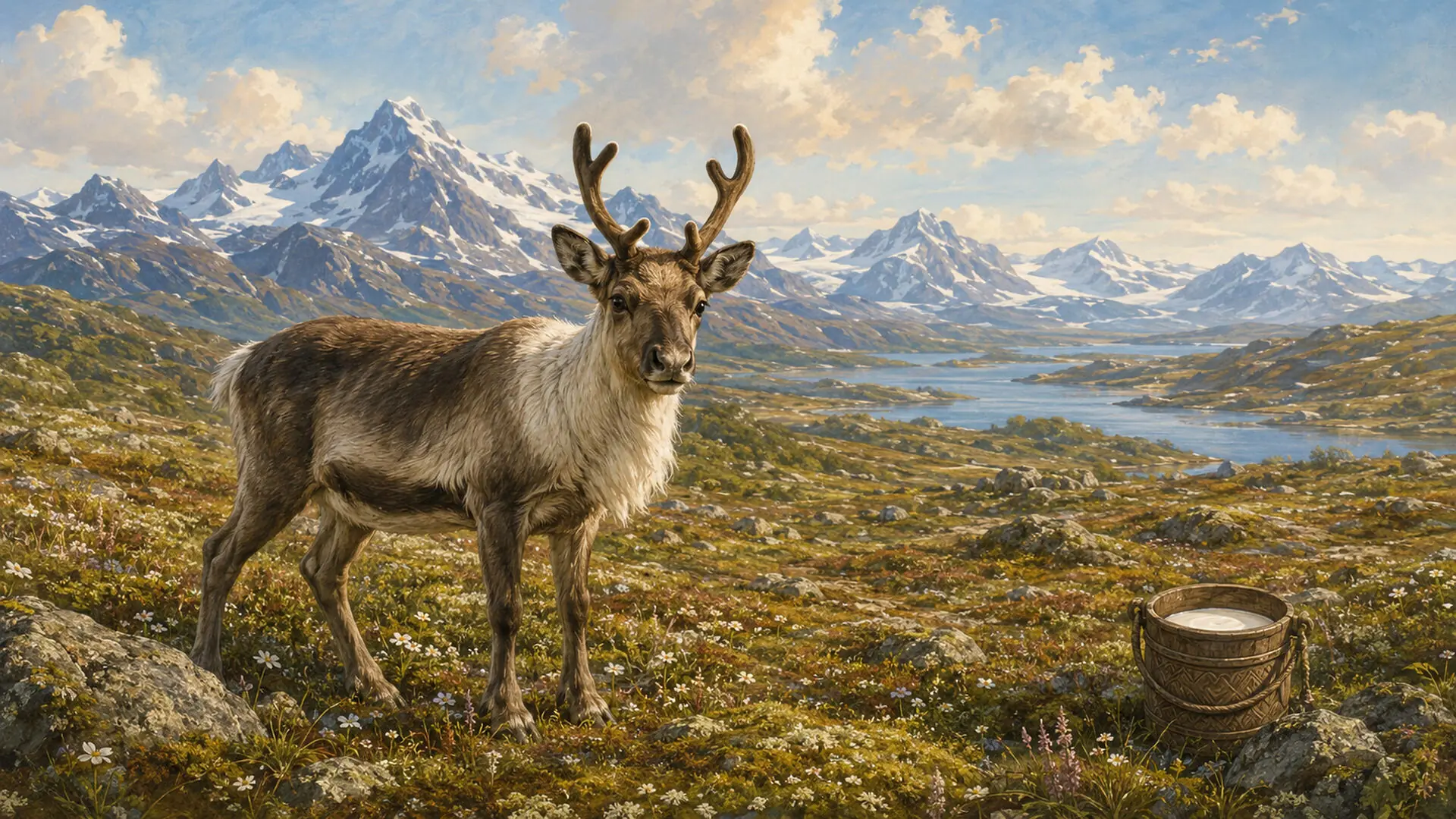
An unusually concentrated milk produced by reindeer, traditionally associated with reindeer-herding cultures of northern Eurasia.
Reindeer milk is produced by the domestic reindeer (Rangifer tarandus tarandus), semi-domesticated by the Sámi people of northern Scandinavia (Norway, Sweden, Finland) and by indigenous peoples of Siberia and northern Russia for several thousand years. Reindeer herding is central to Sámi culture and identity, and reindeer milk — along with meat and hides — has been one of the primary resources derived from reindeer husbandry in Arctic and subarctic environments.
Reindeer milk is one of the richest and most nutritionally concentrated animal milks in the world, reflecting the extreme energy demands of the Arctic environment and the caloric needs of rapidly growing reindeer calves. Its fat content changes substantially across the lactation period — from around 11–15% at mid-lactation to 15–20% at late lactation, with a documented mean of approximately 15.5% fat and a full-lactation range of roughly 11–21%. Protein content follows a similar pattern, averaging around 9.9% and rising with lactation stage. By comparison, Holstein cow milk typically contains 3.5–4.5% fat — making reindeer milk significantly richer by any measure.
Reindeer cows produce very small quantities of milk — typically 1–1.5 litres per day during a short lactation period — and milking must be done carefully to ensure calves receive adequate nutrition. As a result, reindeer milk has never been commercially produced at scale and remains almost entirely consumed within traditional Sámi and indigenous Siberian contexts. Some Sámi families have historically made small amounts of reindeer butter and cheese for personal consumption.
Reindeer milk composition varies significantly with lactation stage. Based on the most cited study (Gjøstein et al. 2004), approximate values are:
Reindeer milk is among the richest animal milks in the world. Its low lactose content compared to cow milk reflects the energy strategy of Arctic species, which concentrate energy as fat rather than carbohydrate. The caloric value of the milk averages around 8.7 kJ/g and increases significantly with lactation stage. Reindeer milk is not available commercially and its consumption is limited to traditional cultural contexts.
Reindeer milk is consumed fresh by Sámi herders and in small quantities converted into traditional butter and soft cheeses. Due to the extremely low yields and the priority of ensuring calves receive adequate nutrition, milking for human consumption is limited and selective. Reindeer milk is not available in commercial markets and is considered a traditional subsistence resource rather than a commercial dairy product.