Horse Milk
RegionalCentral Asia and parts of the Eurasian steppe
Milk produced by mares. It is especially associated with traditional dairy cultures of Central Asia and is frequently consumed after fermentation.

Milk produced by mares. It is especially associated with traditional dairy cultures of Central Asia and is frequently consumed after fermentation.
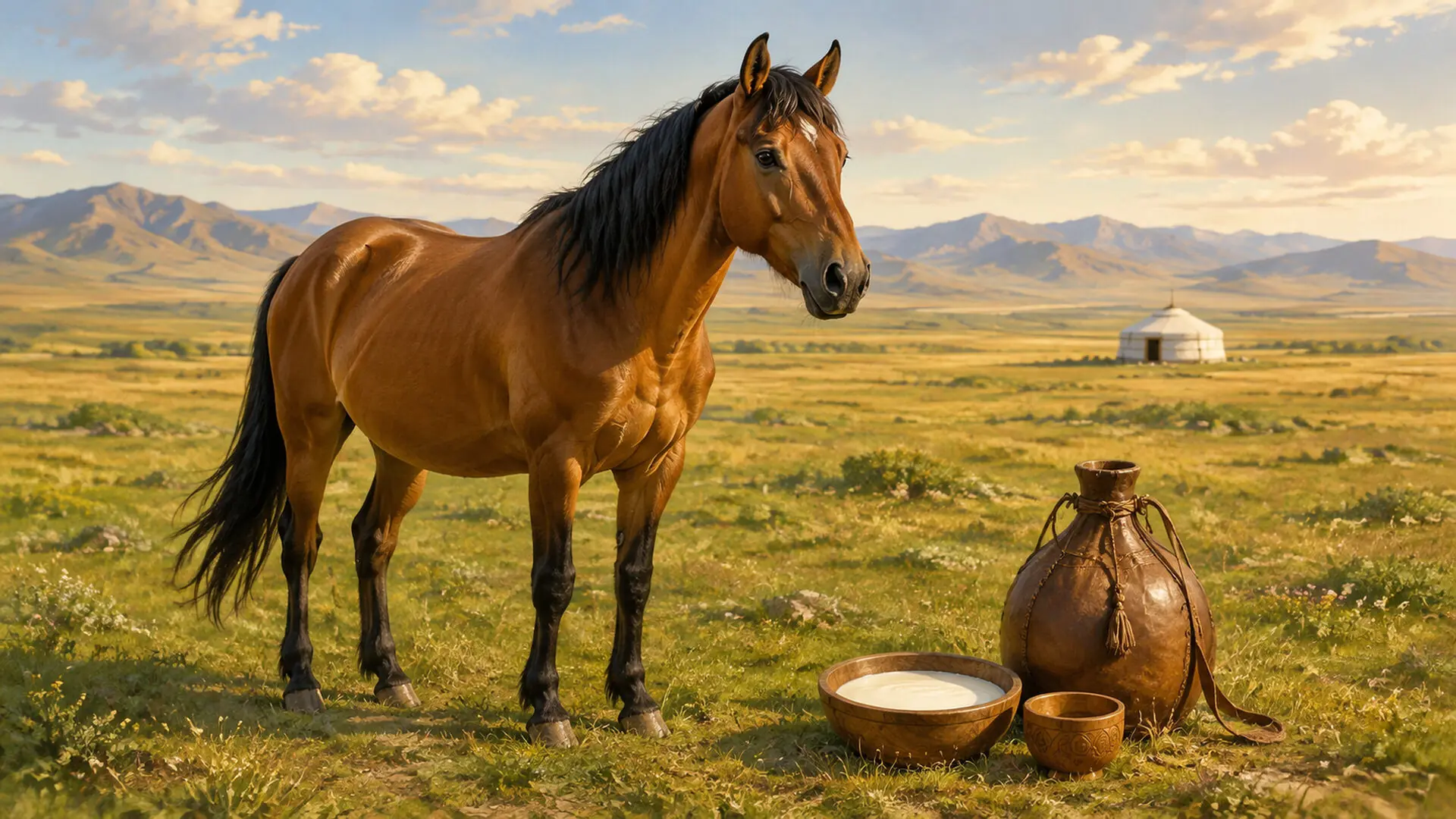
Horse milk is produced by mares (female domestic horses, Equus caballus) and has been consumed by the nomadic peoples of Central Asia — particularly in Kazakhstan, Kyrgyzstan, Mongolia, and surrounding regions — for at least 5,000 years. Archaeological evidence of horse domestication and milk use has been found at ancient Botai culture sites in northern Kazakhstan, dating to approximately 3500 BCE. Horse milk holds deep cultural significance in Central Asian steppe cultures, where horses were central to pastoral life, warfare, and tradition.
Horse milk is compositionally similar to human breast milk in several respects — it has a relatively low fat content (1–2%), a high proportion of whey proteins relative to caseins, and a high lactose content (approximately 6–7%), giving it a naturally sweet flavour. It is thinner and more watery in appearance than cow or goat milk. Mare milk is the primary raw material for kumiss (also spelled kumis or qymyz), a traditional fermented horse milk drink with a slightly fizzy, alcoholic character that has been produced and consumed across the Central Asian steppe for millennia.
Commercial production of horse milk is a small but established industry in Kazakhstan, Russia, Germany, Belgium, and the Netherlands, where it is sold fresh or freeze-dried for consumption and for use in cosmetics. Mares produce milk only for the first few months after foaling, and yields are relatively low — typically 6–20 litres per day under managed milking, which requires frequent milking sessions every 2 hours as mares have very small udder capacity.
Horse milk has a composition resembling human breast milk. Typical values:
Horse milk is low in fat and has a high lactose content. Its whey protein profile is quite different from cow milk — it contains high levels of lysozyme and lactoferrin, both antimicrobial proteins also found in human breast milk. The high lactose content means it is not suitable for people with lactose intolerance.
Horse milk is consumed fresh or fermented into kumiss across Central Asia, where it is a culturally significant drink associated with hospitality, celebration, and traditional medicine. In Kazakhstan, kumiss is offered to guests and consumed during festivals. In Europe, fresh or freeze-dried horse milk is sold as a specialty health product. Horse milk cosmetics — soaps, creams, and lotions — are produced in several European countries.