Goat Milk
CommonWorldwide
Milk produced by domestic goats and an important dairy food in many parts of the world.
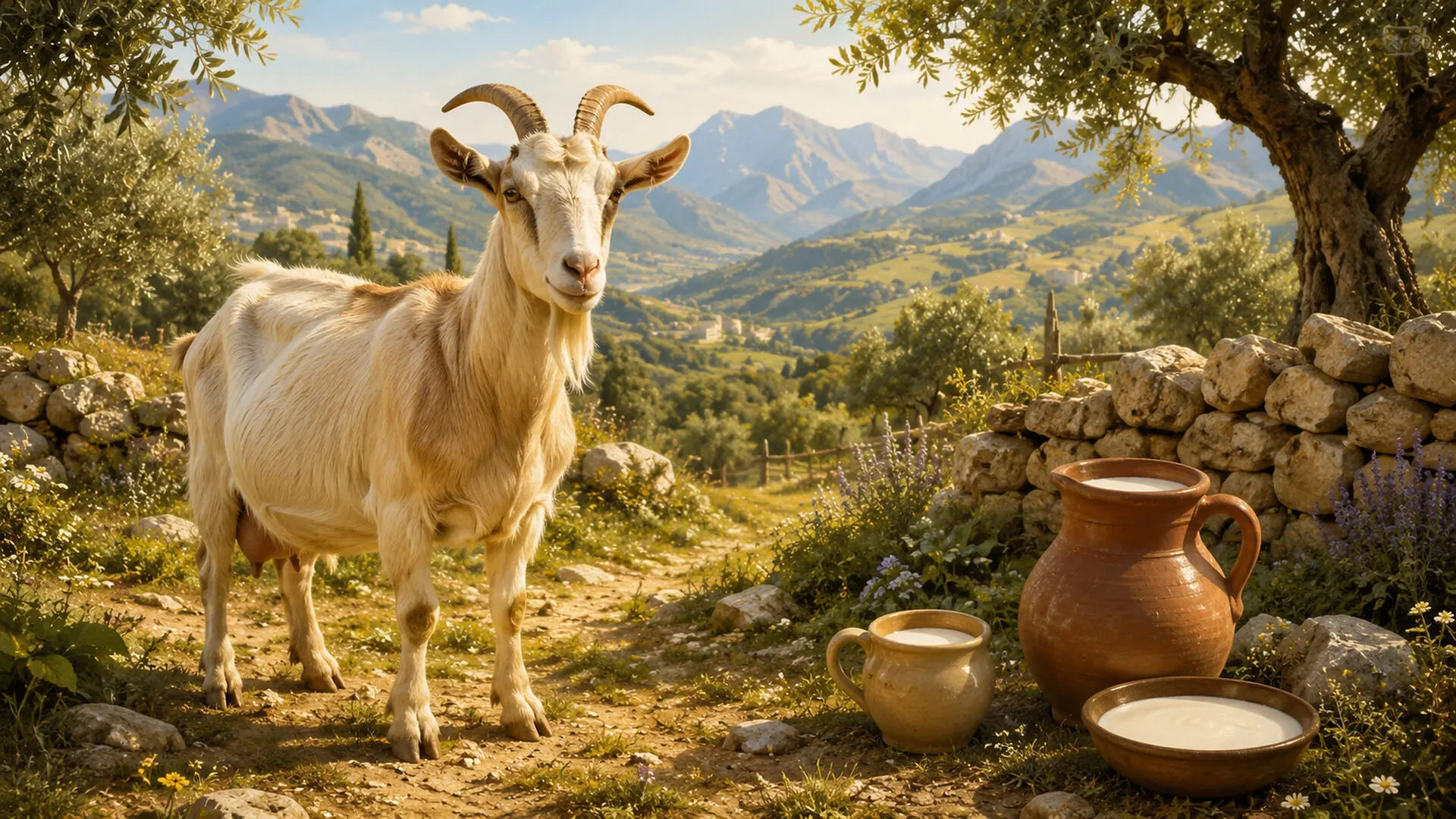





Milk produced by domestic goats and an important dairy food in many parts of the world.
Goat milk is produced by the domestic goat (Capra aegagrus hircus) and is the second most widely consumed animal milk in the world by the number of people who regularly drink it, particularly prevalent across Southern Europe, the Middle East, Africa, and South Asia. Goats were among the first animals domesticated by humans — archaeological evidence suggests domestication in the Zagros Mountains of western Iran approximately 10,000–11,000 years ago. According to the Food and Agriculture Organization of the United Nations (FAO), goat milk production exceeds 17 million tonnes annually worldwide, with India, Bangladesh, and Sudan among the top producers.
Goat milk has a composition somewhat similar to cow milk but with several notable differences. The fat globules in goat milk are smaller and more evenly dispersed than in cow milk, and the milk naturally lacks agglutinin — a protein that causes fat globules in cow milk to cluster and rise as cream. This means goat milk is naturally homogenised: the fat does not separate on standing. The fat in goat milk contains a higher proportion of short- and medium-chain fatty acids than cow milk, which are more rapidly absorbed by the body and contribute to goat milk's characteristic flavour — sometimes described as slightly tangy or "goaty," though this varies significantly by breed, feed, and hygiene of production.
Goat milk differs from cow milk in its casein protein profile — it contains less alpha-s1 casein, the protein most commonly associated with cow milk allergy. As a result, some people who are sensitive to cow milk find goat milk more digestible, though goat milk still contains lactose and significant amounts of protein and is not suitable for people with serious dairy allergies. Goat milk forms a softer, more fragile curd than cow milk when digested, which is thought to contribute to its digestibility for some individuals.
Goat whole milk (per 240ml / 1 cup) typically contains:
Goat milk is slightly higher in fat, protein, and calcium than cow whole milk per serving. It contains more short- and medium-chain fatty acids than cow milk. Its lactose content is similar to cow milk, so it is not suitable for people with lactose intolerance. Goat milk is a good source of calcium, phosphorus, vitamin B2 (riboflavin), and potassium.
Goat milk is consumed fresh across much of the developing world. In the Mediterranean and Middle East, it is the primary milk for making a wide range of traditional cheeses — including feta (Greece, from sheep milk or a sheep-goat blend up to 30% goat), chèvre (France), halloumi (Cyprus), and labneh (Lebanon/Syria). Note: Manchego PDO (Spain) is made exclusively from Manchega sheep milk — no blending with other animal milks is permitted under its EU PDO regulation. Goat milk yogurt is tangier and creamier than cow milk yogurt. Goat milk soap is popular for its moisturising properties. In some countries, goat milk-based infant formula is sold as an alternative to cow milk formula.