Bison Milk
ExperimentalNorth America
Milk produced by female American bison. Bison are not an established commercial dairy species, and reliable food-composition data for their milk are extremely limited.
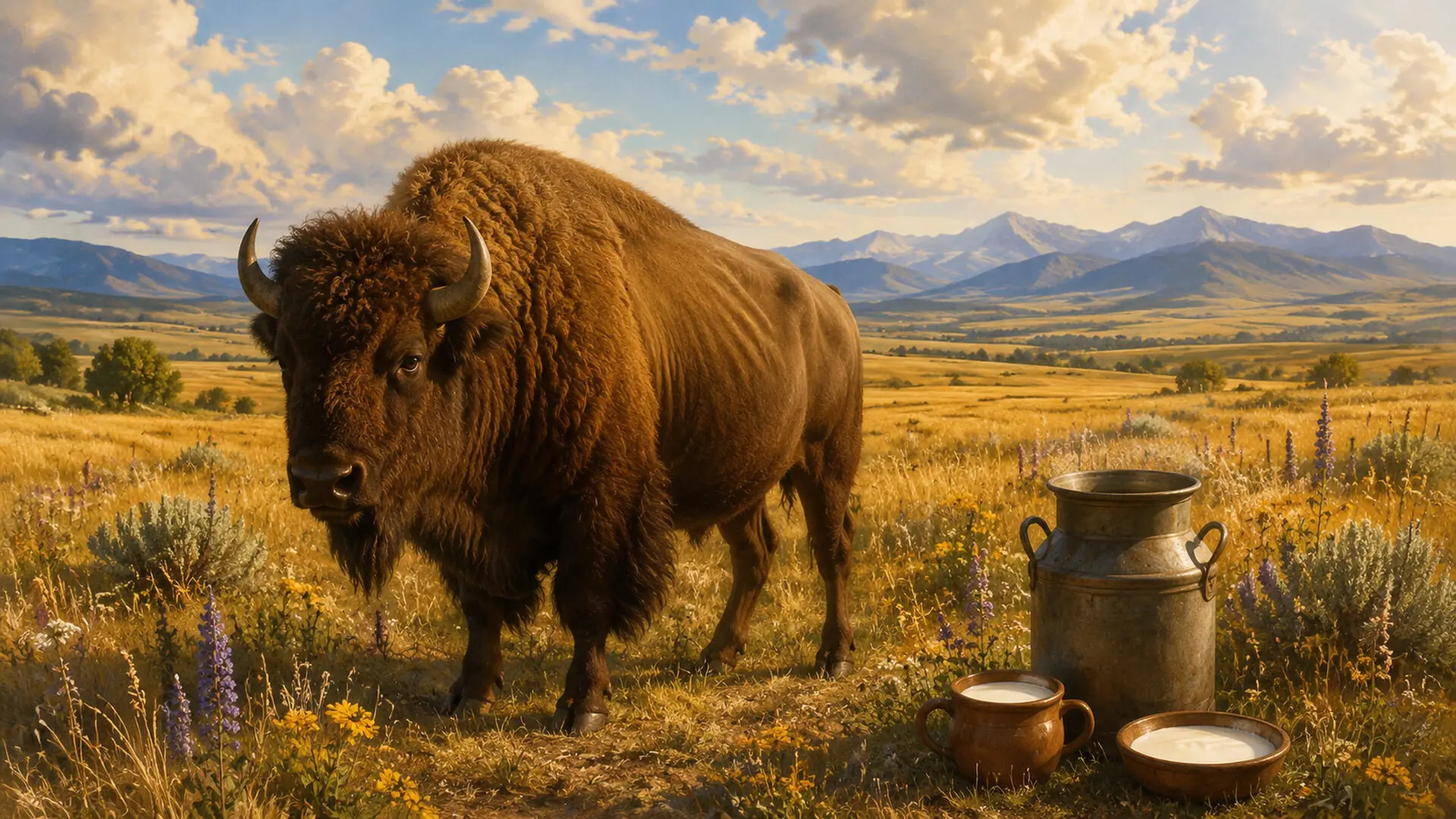
Milk produced by female American bison. Bison are not an established commercial dairy species, and reliable food-composition data for their milk are extremely limited.
Bison milk is produced by the American bison (Bison bison), also commonly known as the American buffalo. Bison are the largest native land mammals in North America and were once found in enormous herds of tens of millions across the Great Plains. By the late 19th century, the bison population was reduced to near extinction through commercial hunting; conservation efforts have since restored populations to several hundred thousand animals living in managed herds and protected reserves.
Bison milk is not commercially produced or sold and represents an experimental or research-stage dairy product. Bison cows produce milk naturally to nurse their calves, but they are not domesticated dairy animals and do not tolerate regular milking in the way that cattle do. Their milk yield is considerably lower than dairy cattle breeds, and the animals themselves are more difficult and potentially dangerous to handle.
Published research on bison milk composition reveals a surprising profile: compared to typical Holstein cow milk, bison milk is lower in fat but higher in protein and lactose. This counters the common assumption that bison — as a larger, wilder animal — would produce richer milk. A small number of specialty producers in North America have experimented with bison cheese and butter in very small quantities, though these remain extremely niche products. Bison are primarily raised for their lean beef rather than for dairy.
Published comparative research gives the following approximate composition for American bison (Bison bison) milk, which differs from common assumptions:
For comparison, Holstein cow milk typically runs 3.5–5.5% fat, 3.1–3.9% protein, and 4.7–5.0% lactose. Bison milk's lower fat content means it differs from the stereotype of wild-animal milk being "richer" than dairy cattle milk. Its higher protein content is notable, and its higher lactose level means bison milk is not lower in lactose than cow milk — a point worth noting for anyone with lactose sensitivity. Because bison are not domesticated dairy animals, these figures come from limited research samples rather than commercial testing.
Bison milk is not commercially available for drinking or general cooking. A tiny number of specialty producers in the United States and Canada have produced experimental bison milk cheese and butter in very small quantities. These products are marketed as novelty or artisan items rather than mainstream dairy alternatives. Bison are primarily managed as beef animals rather than dairy animals.