West Africa and the Mediterranean, with a particularly strong traditional association with Valencia, Spain
A plant beverage extracted from tigernut tubers. In Valencia, Spain, a traditional form is known as horchata de chufa.
About Tigernut Milk
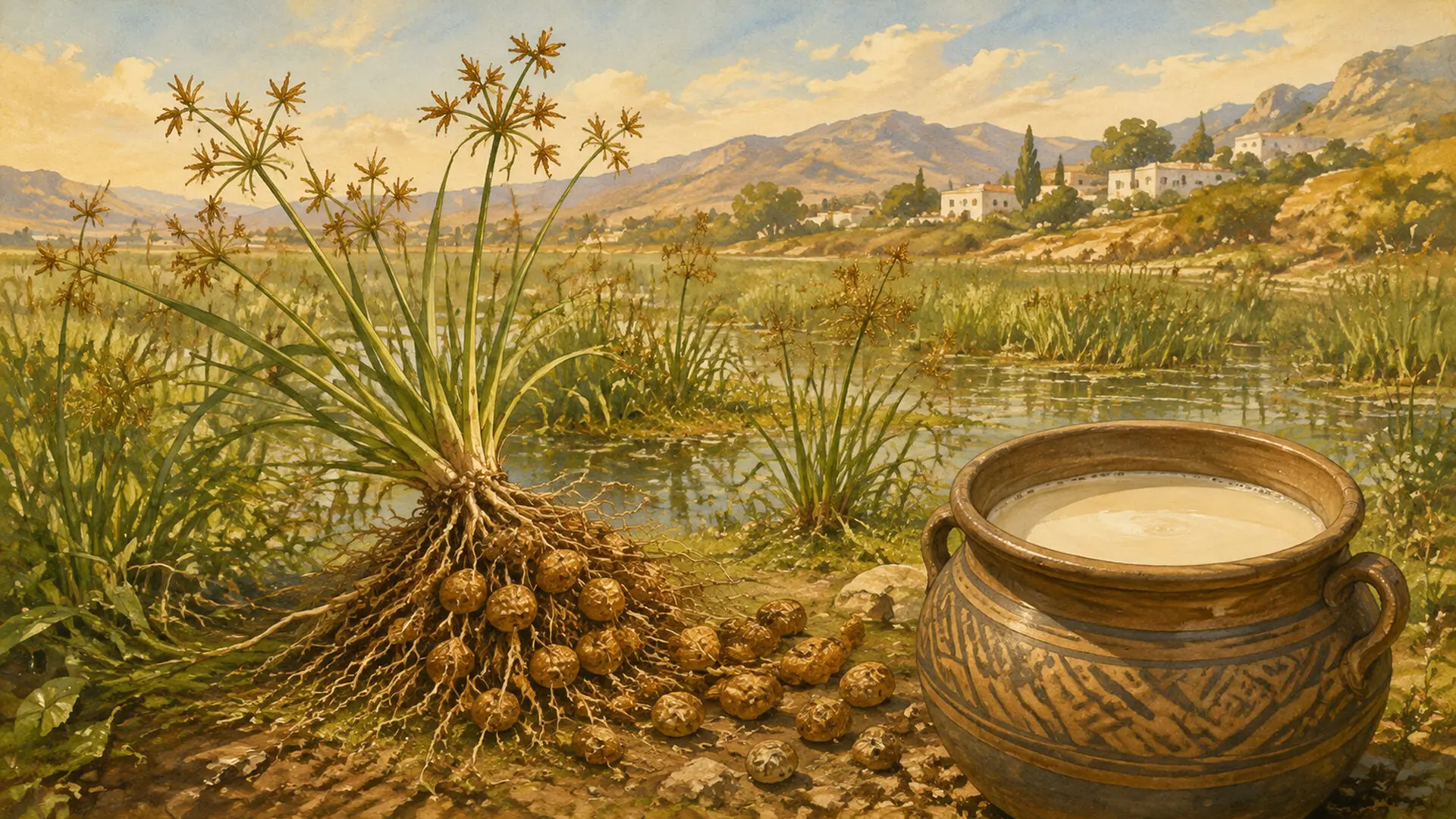
Tigernut milk — known in Spanish as horchata de chufa — is a traditional plant-based beverage made from tigernuts (Cyperus esculentus), which despite their name are not nuts at all but small, starchy tubers (underground storage organs) from a sedge grass. Tigernuts have been consumed by humans for an extraordinarily long time — they have been found at archaeological sites in Egypt dating back over 4,000 years, and paleoanthropologists have proposed that Paranthropus boisei, a hominin species that lived approximately 1.4–2.4 million years ago in Africa, may have consumed Cyperus esculentus as a significant part of its diet, based on dental microwear analysis.
Horchata de chufa is deeply associated with the Valencia region of Spain, where tigernuts have been cultivated since at least the 13th century, when they were introduced by Moorish settlers from North Africa. The Valencia region holds a Protected Designation of Origin (PDO) for horchata de chufa under European Union law, defining the geographic area and production standards. Valencian horchata is traditionally made by soaking tigernuts in water overnight, grinding them, mixing with water and sugar, and straining through a fine cloth. The resulting drink is white, creamy, sweet, and mildly flavoured with a distinctive earthiness.
Tigernuts are nutritionally interesting: they are high in starch, fibre (particularly resistant starch), and fat (predominantly oleic acid, the same monounsaturated fat dominant in olive oil). They contain no gluten, no dairy, no soy, and no tree nuts — making tigernut milk exceptionally allergen-friendly. They are also a source of vitamin E and minerals including iron and potassium. Tigernut milk is consumed year-round in Valencia and exported internationally as a specialty beverage and dairy alternative.
Sources & Further Reading
European Commission DOOR Database — Horchata de Chufa PDO — EU Protected Designation of Origin registration for Horchata de Chufa, restricting use of the name to products made in the Valencia region of Spain from locally grown tigernuts
Traditional horchata de chufa and modern tigernut drinks vary in dilution and added sugar. A single calorie or sugar figure is not universal, so product labels or recipe-specific measurements are needed for exact values.
CaloriesVaries with recipe and added sugar
FatVaries with tigernut concentration
CarbohydratesVaries; sweetened versions are higher
FibreDepends on processing and straining
Vitamin EDepends on tigernut content
AllergensFree of top allergens
Traditional horchata is sweetened and therefore higher in calories and sugar than unsweetened plant milks. Tigernut-based drinks provide fibre (including resistant starch, which feeds gut bacteria), oleic acid (the same healthy fat as in olive oil), and vitamin E. Tigernut milk is free of all major food allergens — no dairy, nuts, soy, or gluten.
Tigernut milk is best known as the base for horchata de chufa, the traditional Valencian cold drink served in horchaterías (specialist shops) across Valencia and increasingly throughout Spain. It is consumed chilled, often accompanied by fartons (an elongated sweet pastry). Commercially, tigernut milk and tigernut flour are sold internationally as specialty allergen-free products. The milk can be used in baking, smoothies, and cooking as an allergen-friendly alternative to other plant milks, with a distinctive sweet earthiness.
Interesting Facts
Tigernuts are not nuts — they are small tubers (underground storage organs) from a sedge grass (Cyperus esculentus), similar in function to a tiny potato or water chestnut, despite their name.
Paleoanthropologists have proposed that Paranthropus boisei — a hominin that lived 1.4–2.4 million years ago — may have consumed tigernuts as a major part of its diet, based on carbon isotope analysis and dental microwear evidence, potentially making Cyperus esculentus one of the oldest human food plants.
Horchata de chufa holds European Union Protected Designation of Origin (PDO) status, restricting the use of the name to horchata produced in the Valencia region of Spain from locally grown tigernuts.
Valencia's horchaterías — specialist shops selling fresh horchata — are a beloved cultural institution in the city, with some establishments operating for over a century and families maintaining the traditional production methods across generations.
Tigernuts contain resistant starch — a type of starch that is not digested in the small intestine and instead feeds beneficial gut bacteria in the large intestine, functioning similarly to dietary fibre.