Pecan Milk
RareLimited household and commercial production, particularly in North America
A nut-based plant beverage made from pecans and water. It remains a niche alternative compared with almond, soy, oat, or coconut beverages.
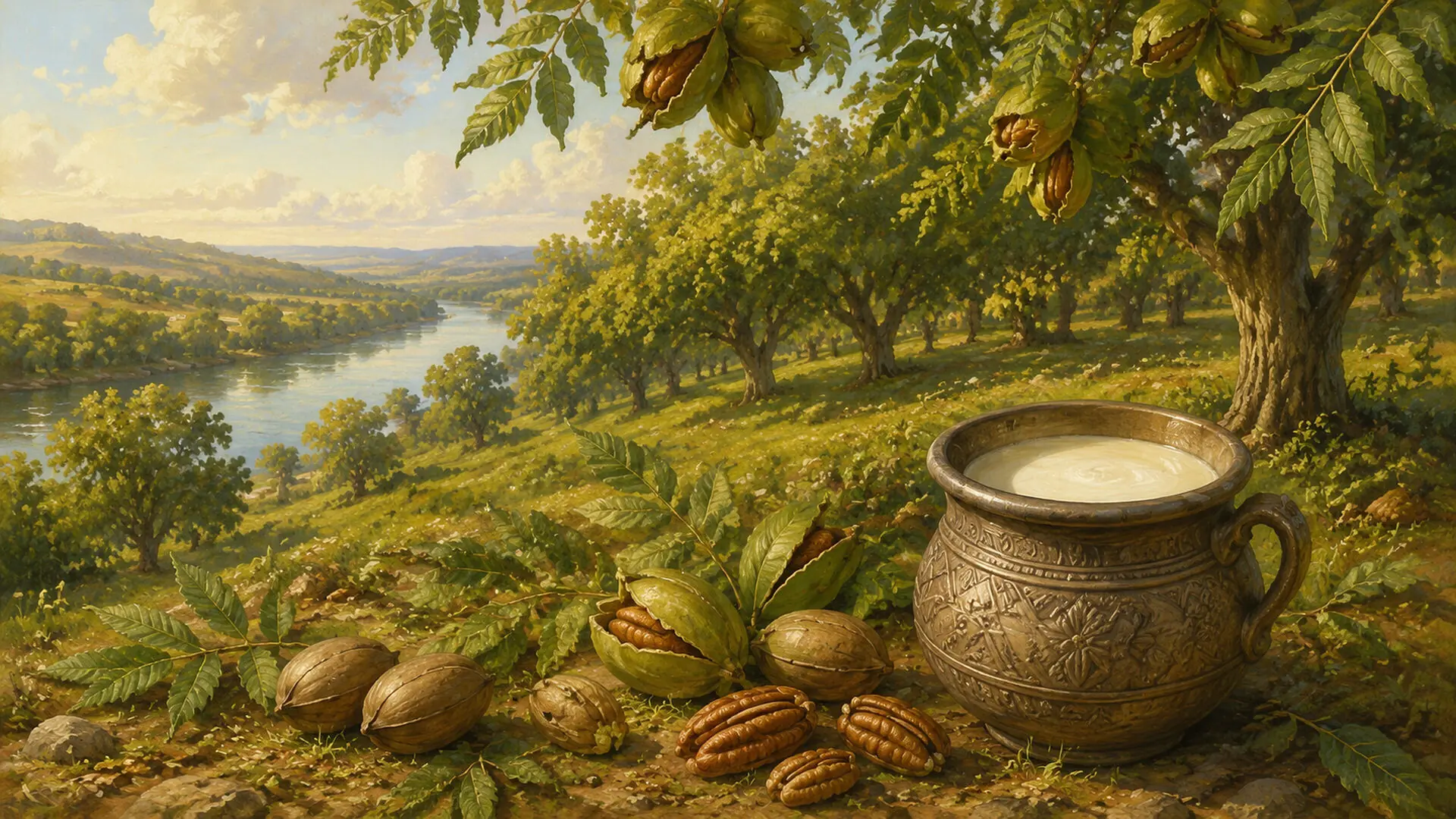



























A nut-based plant beverage made from pecans and water. It remains a niche alternative compared with almond, soy, oat, or coconut beverages.
Pecan milk is a plant-based beverage made from pecans (Carya illinoinensis), a tree nut native to the south-central United States and northern Mexico. Pecans are one of the few major nut crops native to North America, and they hold significant cultural and culinary importance in the American South. Native American peoples, including the Caddo, Cherokee, and Comanche, harvested and consumed wild pecans for centuries before European colonisation. Today, the United States produces approximately 75–80% of the world's pecans, with Georgia and Texas being the leading producing states.
Pecan milk is produced by soaking raw pecans in water, blending with fresh water, and straining through a nut milk bag or fine cloth. The resulting milk has a rich, buttery, slightly sweet flavour that reflects the distinctive taste of pecans. Pecans are particularly high in fat — approximately 72% fat by weight — with a fatty acid profile dominated by oleic acid (monounsaturated) and linoleic acid (polyunsaturated), and relatively low in saturated fat compared to some other nuts. This rich fat content gives pecan milk a naturally creamy texture.
Pecan milk is a niche product that is not widely commercially available and is primarily made at home or produced by small specialty dairies. Its distinctive flavour and richness make it particularly suitable for dessert applications and as a premium ingredient in coffee drinks and baking.
Pecan milk nutrition varies by preparation. Pecans are high in fat with a favourable fatty acid profile:
Pecan milk is rich in monounsaturated fats. It is naturally dairy-free, lactose-free, and gluten-free. Not suitable for people with tree nut allergies. The specific nutritional content in the milk depends heavily on how many pecans are used and the straining method.
Pecan milk's rich, buttery, sweet flavour makes it particularly well suited for dessert applications — pecan pie filling, caramel-style sauces, and autumn-flavoured desserts. In coffee drinks, its natural sweetness and creaminess complement espresso without added sugar. In baking, it can substitute for other nut milks where a richer, nuttier flavour is desired.