Turkey and other limited traditional or specialty contexts
A plant-based beverage made by grinding or blending melon seeds with water. Preparation methods vary in seed-to-water ratio, filtration, sweetness, and other processing steps.
About Melon Seed Milk
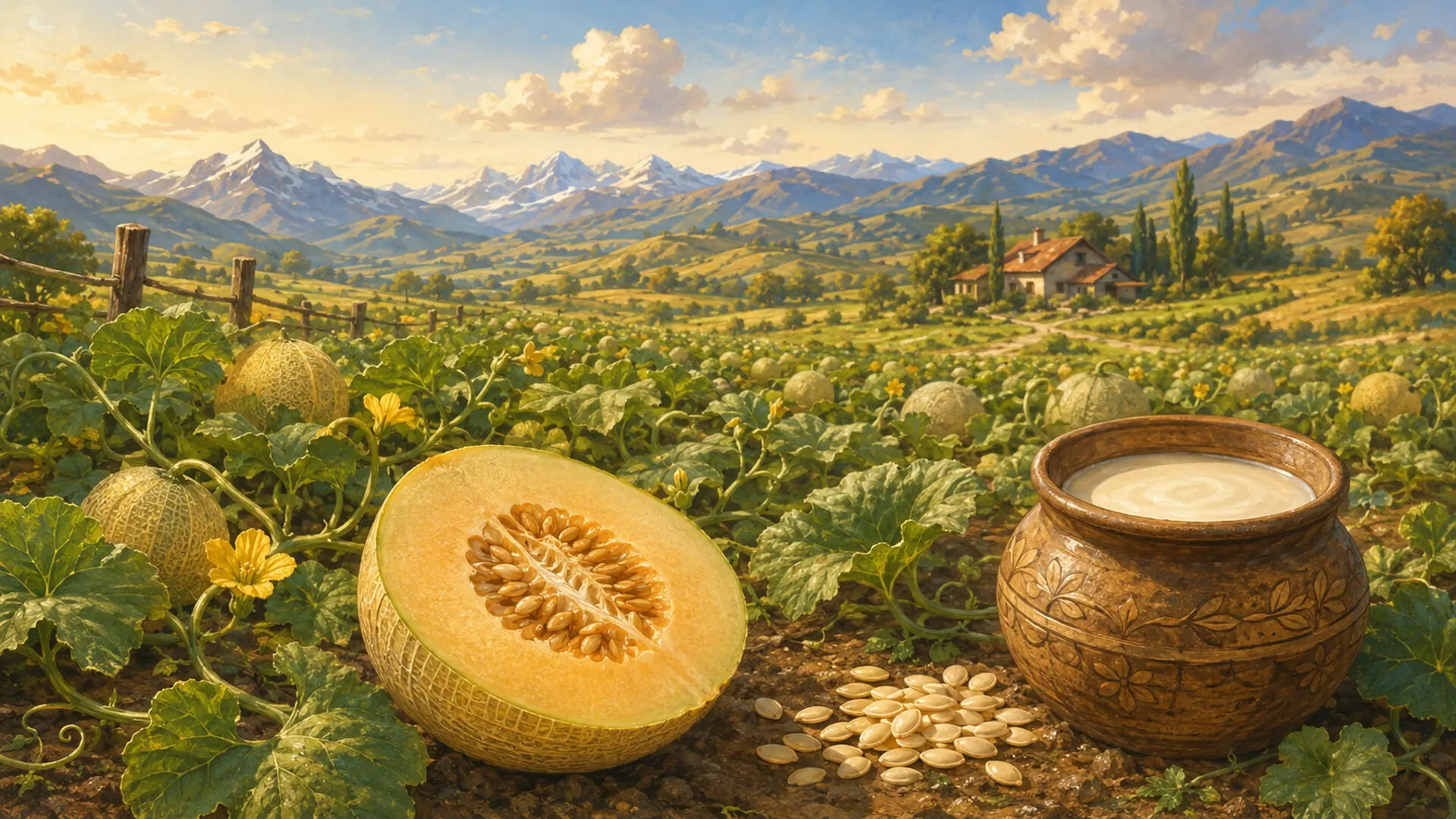
Melon seed milk is a plant-based beverage made from the seeds of various melon species (Cucumis melo and related cucurbits). Melon seeds have been consumed as a food source across parts of Asia, Africa, and the Middle East for centuries — dried and roasted as snacks, pressed for oil, or ground into pastes. Their use as a milk-style beverage is a more recent development, investigated primarily in food science research as part of broader exploration of underutilised plant protein and fat sources.
Melon seeds contain meaningful amounts of protein, fat (including linoleic acid and oleic acid), and minerals. The production of melon seed milk typically involves washing and drying the seeds, soaking them in water, blending with fresh water, and straining through a fine cloth or mesh. The resulting liquid is white to cream-coloured with a mild, slightly nutty flavour. Composition varies considerably depending on the melon variety, seed maturity, and the ratio of seeds to water used in production.
Melon seed milk is not widely commercially available as a standardised product and remains primarily a subject of food research rather than a mainstream consumer product. It has been studied in combination with cow milk and other plant milks as a potential ingredient in fermented dairy-style products and fortified beverages in regions where melons are abundant seasonal crops and the seeds would otherwise be discarded as waste.
Melon seed milk composition is not standardised and varies significantly by preparation. Melon seeds themselves contain:
Fat (seeds)Present (oleic, linoleic)
Protein (seeds)Present
MineralsIron, zinc, magnesium
LactoseNone
GlutenNone
Standard dataNot established
Published melon-seed beverage studies show that processing method materially changes protein, solids, viscosity, and sensory characteristics. Because there is no single standard recipe, Milkapedia does not turn one experimental formulation into a universal per-cup profile. As a plant-based beverage, melon-seed milk contains no dairy lactose.
Common Uses
◌ Plant milk drink◌ Research applications◌ Smoothies
Melon seed milk is used primarily in food research and development contexts. Its most documented application is as a partial substitute for cow milk in fermented yogurt-style products and as an ingredient in nutritionally fortified beverages. In home settings, it can be used like other seed milks in smoothies and cooking.
Interesting Facts
Melon seeds are typically discarded as food waste when melons are eaten — their use in seed milks represents a low-waste approach to food production using a currently underutilised by-product.
In parts of Asia and Africa, dried melon seeds are roasted and eaten as snacks or ground into pastes used in soups and stews.
Melon seed oil (extracted from seeds of Cucumis melo) is used in cosmetics for its emollient properties — similar to cucumber seed oil.
Cucurbits (the family including melons, cucumbers, squash, and gourds) have among the largest seeds relative to fruit size of any major food crop, making their seeds a significant potential food source.