South America and limited specialty production elsewhere
A plant-based beverage produced from sacha inchi seeds and water. Research has evaluated beverages made from both roasted seeds and defatted material left after oil extraction.
About Sacha Inchi Milk
Sacha inchi milk is a plant-based beverage made from the seeds of the sacha inchi plant (Plukenetia volubilis), a vine native to the Amazon rainforest regions of Peru, Ecuador, Colombia, and Bolivia. Sacha inchi — also known as the Inca peanut or mountain peanut — has been consumed by indigenous Amazonian and Andean communities for centuries, with evidence of its cultivation dating back approximately 3,000 years at archaeological sites in Peru. The seeds have gained international attention in recent decades as a "superfood" due to their high omega-3 fatty acid and protein content.
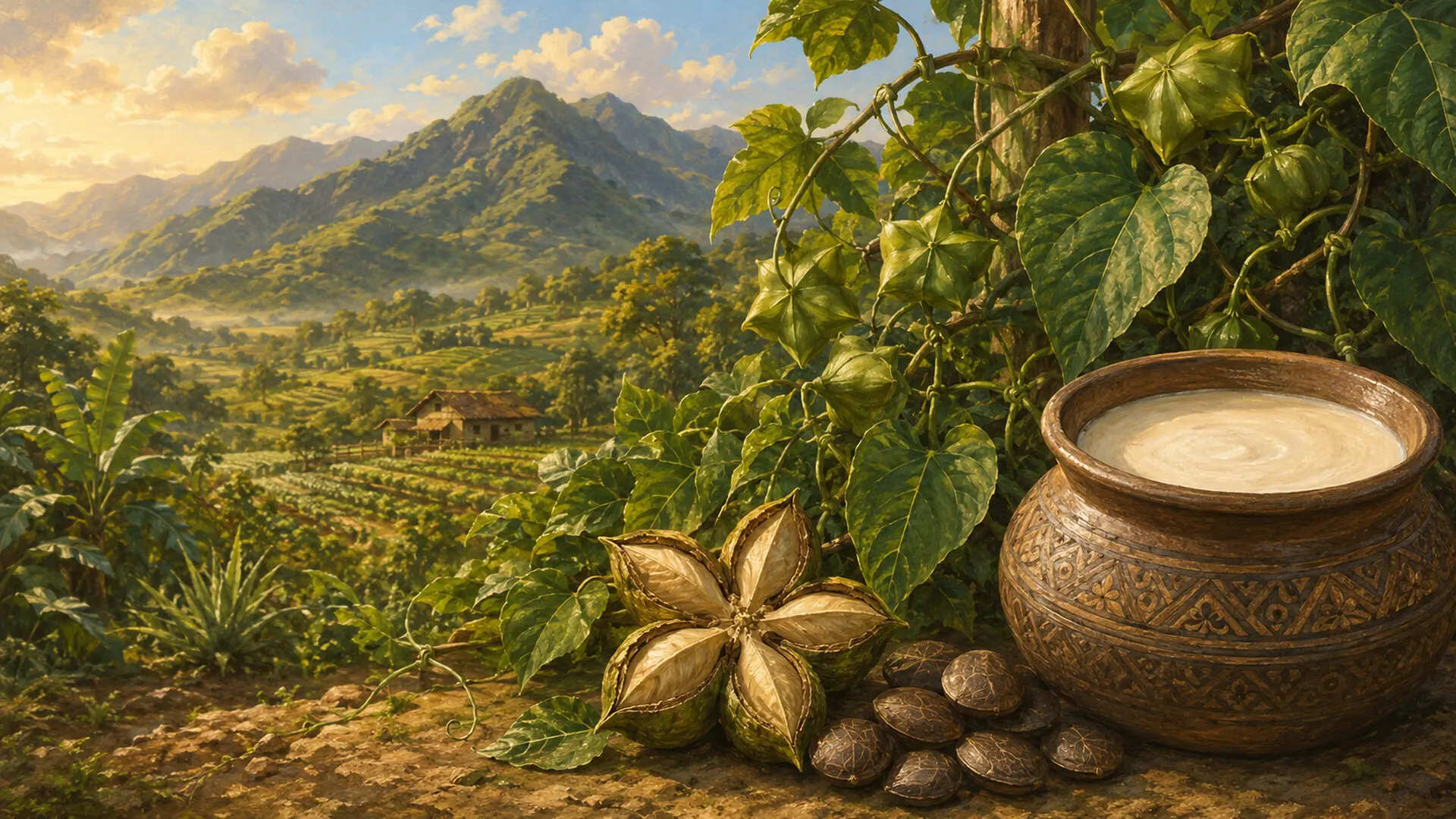
Sacha inchi seeds are star-shaped in their seed pods (pods typically have 4–7 segments) and are large, flat, and dark brown. They contain approximately 35–54% fat — with an unusually high proportion of alpha-linolenic acid (ALA), the plant-based omega-3 fatty acid (approximately 45–50% of the total fat). They also contain approximately 27–33% protein and all essential amino acids, making them one of the most nutritionally complete plant seeds known. Sacha inchi seeds have a slightly bitter, earthy flavour when raw, but become more neutral and pleasant when roasted.
Sacha inchi milk is produced by blending sacha inchi seeds or sacha inchi oil with water and straining the result. The milk is pale white to cream in colour with a mild, slightly nutty flavour. It is commercially produced in Peru and is exported to international health food markets. Sacha inchi milk carries some of the omega-3 and protein benefits of the whole seeds, making it one of the more nutritionally interesting specialty plant milks available.
Sacha inchi seeds are exceptionally high in omega-3 ALA and protein. The milk carries some of these benefits:
Omega-3 ALAVery high in seeds (~45%)
ProteinHigh in seeds (~30%)
Complete proteinSeeds contain all essential amino acids; amounts in beverage depend on processing and seed concentration
Vitamin ENotable in seeds
LactoseNone
GlutenNone
Sacha inchi seeds contain one of the highest concentrations of plant-based omega-3 ALA of any known food source. They provide complete protein with all essential amino acids. Sacha inchi milk carries some of these benefits, with the actual amounts depending on preparation method and seed concentration.
Common Uses
◌ Plant milk drink◌ Smoothies◌ Coffee◌ Baking◌ Health drinks
Sacha inchi milk is used primarily as a premium health food plant milk in specialty food markets, particularly in Peru and in export markets in Europe, North America, and Asia. It is used in smoothies, health drinks, coffee, and baking. Sacha inchi oil (pressed from the seeds) is also sold as a specialty culinary and cosmetic oil.
Interesting Facts
Sacha inchi seeds contain a higher percentage of omega-3 ALA than flaxseeds, making them one of the richest known plant sources of this essential fatty acid.
The sacha inchi plant produces distinctive star-shaped seed pods — each pod contains 4–7 seeds arranged like segments of an orange — making it easily recognisable among Amazonian cultivated plants.
Sacha inchi has been cultivated in Peru's Amazon regions for approximately 3,000 years, with seed remains found at multiple pre-Columbian archaeological sites.
Peru has positioned sacha inchi as a strategic export crop, with government and NGO support for smallholder farmers growing the vine in the Peruvian Amazon and Andean highlands.
Sacha inchi seeds must be roasted or otherwise processed before eating raw — unprocessed raw seeds contain antinutritional compounds that can cause digestive discomfort.