Pumpkin Seed Milk
RareHousehold and limited commercial production
A seed-based plant beverage made by blending pumpkin seeds with water and, depending on the preparation, straining the resulting mixture.
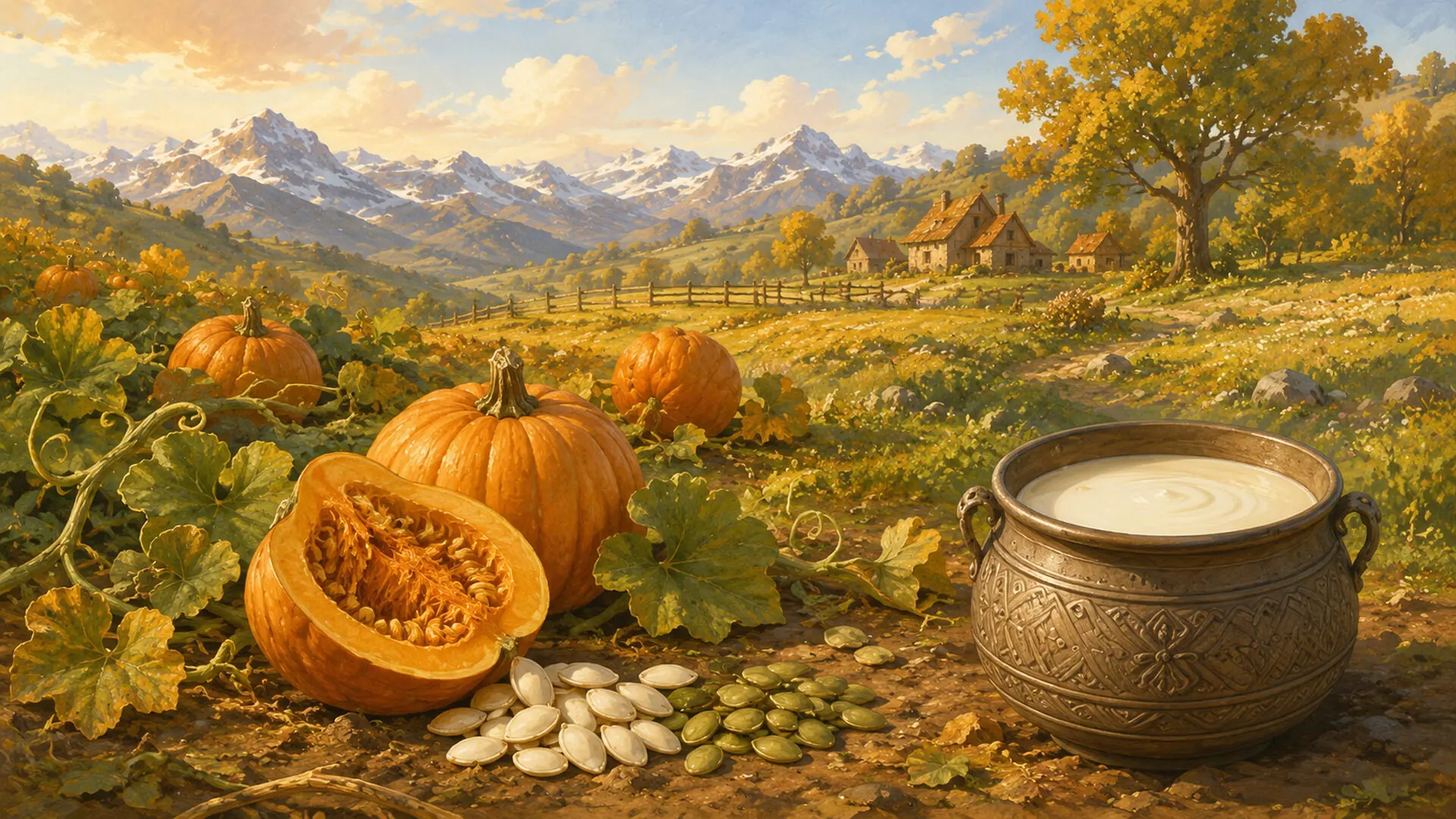



























A seed-based plant beverage made by blending pumpkin seeds with water and, depending on the preparation, straining the resulting mixture.
Pumpkin seed milk is a plant-based beverage made from pumpkin seeds (Cucurbita pepo), also known as pepitas. Pumpkin seeds have been consumed as a food source by indigenous peoples of the Americas for thousands of years — archaeological evidence from Mexico suggests pumpkin cultivation and seed use dating back approximately 7,500 years. Today, pumpkin seeds are consumed globally as snacks, salad toppings, and cooking ingredients, and their use as a milk-style beverage has attracted growing research and commercial interest.
Pumpkin seed milk is made by soaking raw, shelled pumpkin seeds in water, blending with fresh water, and straining through a fine cloth or nut milk bag. The resulting milk has a mild, slightly nutty and earthy flavour with a pale greenish-white colour reflecting the green pigment in pumpkin seed flesh. Pumpkin seeds are nutritionally dense — they contain approximately 49% fat and 30% protein, with a fatty acid profile including linoleic acid (omega-6), oleic acid (monounsaturated), and alpha-linolenic acid (ALA, omega-3). They are also a notable source of magnesium, zinc, iron, and the amino acid tryptophan.
Pumpkin seed milk is not widely commercially available as a standardised product, but interest has grown due to its nutritional profile and its status as a dairy-free, soy-free, nut-free, and gluten-free option. It is primarily made at home or explored in food research contexts as a sustainable, nutrient-dense plant milk alternative.
Pumpkin seeds are highly nutritious. The milk carries some of these properties depending on preparation:
Pumpkin seed milk is one of the few seed milks free of all major allergens — no dairy, nuts, soy, or gluten. Pumpkin seeds contain magnesium, zinc, and iron; the finished drink retains variable amounts depending on preparation and straining. The milk carries some of these mineral benefits depending on how it is prepared and strained.
Pumpkin seed milk can be used like other seed milks in smoothies, baking, and cooking. Its earthy, mild flavour pairs well with autumn spices (cinnamon, nutmeg, ginger) and works in savoury applications like soups and grain dishes. Its allergen-free profile makes it a useful option for households managing multiple food allergies simultaneously.