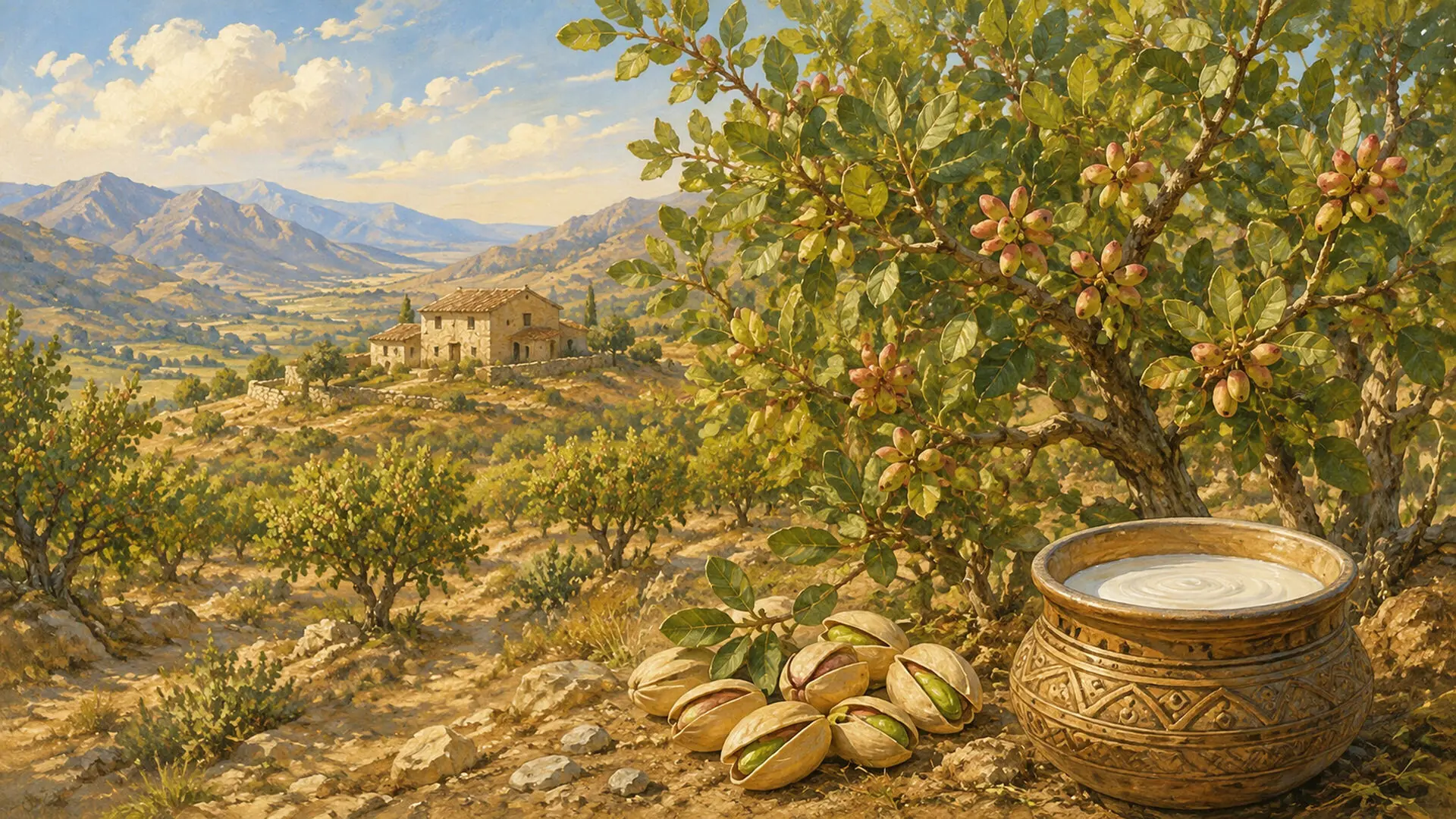
Limited commercial production; pistachios are widely cultivated in the Mediterranean region, Western Asia, and the United States
A plant-based beverage made from pistachios and water. Commercial and experimental formulations vary in pistachio concentration, processing method, and additional ingredients.
About Pistachio Milk
Pistachio milk is a plant-based beverage made from pistachio nuts (Pistacia vera), a tree native to Central Asia and the Middle East. Pistachios have been cultivated and consumed since at least 7,000 BCE, with evidence of their use found at archaeological sites across the Fertile Crescent. They are mentioned in the Bible (Genesis 43:11) and the Quran, and have been prized across Persian, Arab, and Mediterranean cultures for millennia. Today, Iran, the United States (particularly California), and Turkey are the world's largest producers.
Pistachio milk is produced by soaking raw, shelled pistachios in water, blending with fresh water, and straining. The resulting milk has a distinctive pale green to cream colour (from the green pigments in pistachio flesh) and a mild, sweet, slightly earthy and nutty flavour that is quite distinct from other nut milks. The colour alone makes pistachio milk visually striking compared to the white of most plant milks. Pistachios are relatively lower in fat than most other nuts (approximately 45% fat), with a fatty acid profile dominated by oleic acid (monounsaturated).
Pistachio milk is commercially available in a growing number of markets and has gained significant attention from specialty food producers and cafes who value its unique colour, distinctive flavour, and fashionable positioning. It is particularly popular in the Middle East and among consumers interested in novel food experiences.
Pistachio-milk formulas vary substantially, so Milkapedia does not treat whole-pistachio composition or a single brand label as a universal beverage profile.
CaloriesVaries by recipe/brand
FatVaries by recipe/brand
ProteinVaries by recipe/brand
Vitamin B6Present in whole pistachios; drink level varies
PotassiumPresent in whole pistachios; drink level varies
LactoseNone
Pistachio milk is higher in protein than many other nut milks, reflecting pistachios' relatively high protein content compared to other nuts (approximately 20% protein by weight). It is naturally dairy-free and lactose-free. Not suitable for people with tree nut allergies. Fortification varies by product, so labels should be checked for calcium and vitamin D.
Pistachio milk's distinctive green colour and flavour make it particularly popular in specialty coffee drinks, desserts, and ice cream. Pistachio lattes have become a trendy specialty coffee item in cafes worldwide. Its flavour pairs beautifully with rosewater, cardamom, saffron, and chocolate — flavour combinations traditional in Middle Eastern and Mediterranean desserts. It is used in pistachio-flavoured ice cream, puddings, and cakes.
Interesting Facts
Pistachios are one of only two nuts mentioned in the Bible — Genesis 43:11 lists them among the best products of Canaan brought as a gift to Egypt.
Pistachio milk has a naturally pale green colour from chlorophyll and carotenoid pigments in the pistachio nut flesh — making it visually distinctive among plant milks.
Pistachios are related to mangoes, cashews, and poison ivy — all members of the Anacardiaceae (cashew) family. People with severe cashew allergies may also react to pistachios.
The pistachio shell splits naturally when the nut is ripe — this is called "smiling" in Persian culture (خندان, khanadan) and is considered a sign of good luck.
California now produces over 90% of American pistachios and approximately 40% of world supply, with the San Joaquin Valley and surrounding areas providing the ideal hot, dry climate pistachios require.