Ice Cream
CommonWorldwide
A frozen dairy dessert made from milk-derived ingredients together with sweeteners and, depending on the variety, flavorings and other permitted ingredients.
A frozen dairy dessert made from milk-derived ingredients together with sweeteners and, depending on the variety, flavorings and other permitted ingredients.
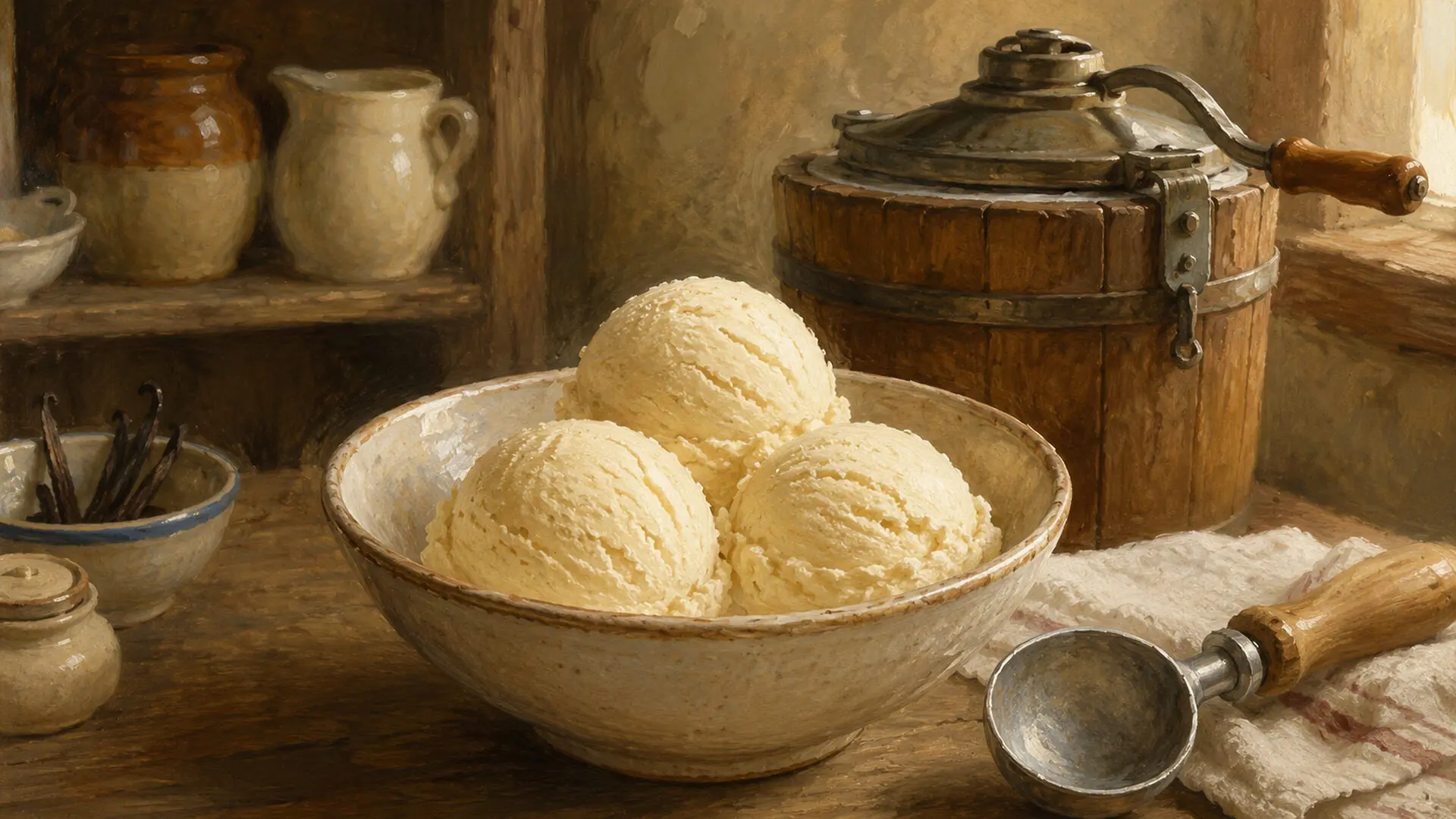
Ice cream is a frozen dairy dessert made from a mixture of cream, milk, sugar, and usually egg yolks or other stabilisers, churned while freezing to incorporate air and produce a smooth, creamy texture. It is one of the world's most universally popular foods, consumed across virtually every culture and climate. The origins of frozen desserts are debated, but forms of ice-sweetened drinks and desserts were enjoyed in ancient China, Persia, and the Arab world, while cream-based frozen confections emerged in Europe during the 17th century and were brought to the Americas by colonists.
Modern ice cream is produced by heating a mixture of dairy ingredients and sugar to pasteurise it, homogenising the mixture, ageing it at cold temperatures to allow the fat to crystallise, then churning it while freezing and incorporating air. Definitions vary by jurisdiction. In the United States, 21 CFR § 135.110 defines ice cream and generally requires at least 10% milkfat, with specified exceptions for bulky flavors.
The range of ice cream styles is enormous: American-style ice cream typically has high overrun (more air) and a soft texture; French-style ice cream (glace) is made with egg yolks for richness; gelato (Italian) has lower overrun and a denser, more intensely flavoured texture; sorbet contains no dairy; sherbet has minimal dairy. Premium ice creams typically contain less air and more fat than standard products, resulting in a richer, denser product.
Standard vanilla ice cream (per 66g / ½ cup serving) typically contains:
Ice cream is relatively high in sugar and fat, particularly saturated fat from dairy cream. Premium and full-fat varieties contain more fat and calories than standard versions. Ice cream contains lactose and dairy proteins, making it unsuitable for people with lactose intolerance or dairy allergy. Dairy-free ice creams made from coconut milk, oat milk, cashew milk, or almond milk are widely available as alternatives.
Ice cream is consumed on its own in cones, cups, and bars, and as a component of many classic desserts. Sundaes combine ice cream with sauce, whipped cream, and toppings. Milkshakes blend it with milk. An affogato — a popular Italian dessert — consists of a shot of hot espresso poured over a scoop of vanilla gelato. Ice cream sandwiched between cookies, wafers, or cake is a global street food tradition. As a base ingredient, ice cream is used in bombes, baked Alaska, and ice cream cakes.