Cream
CommonWorldwide
The fat-rich fluid portion of milk obtained by physical separation. Different cream products contain substantially different amounts of milkfat.
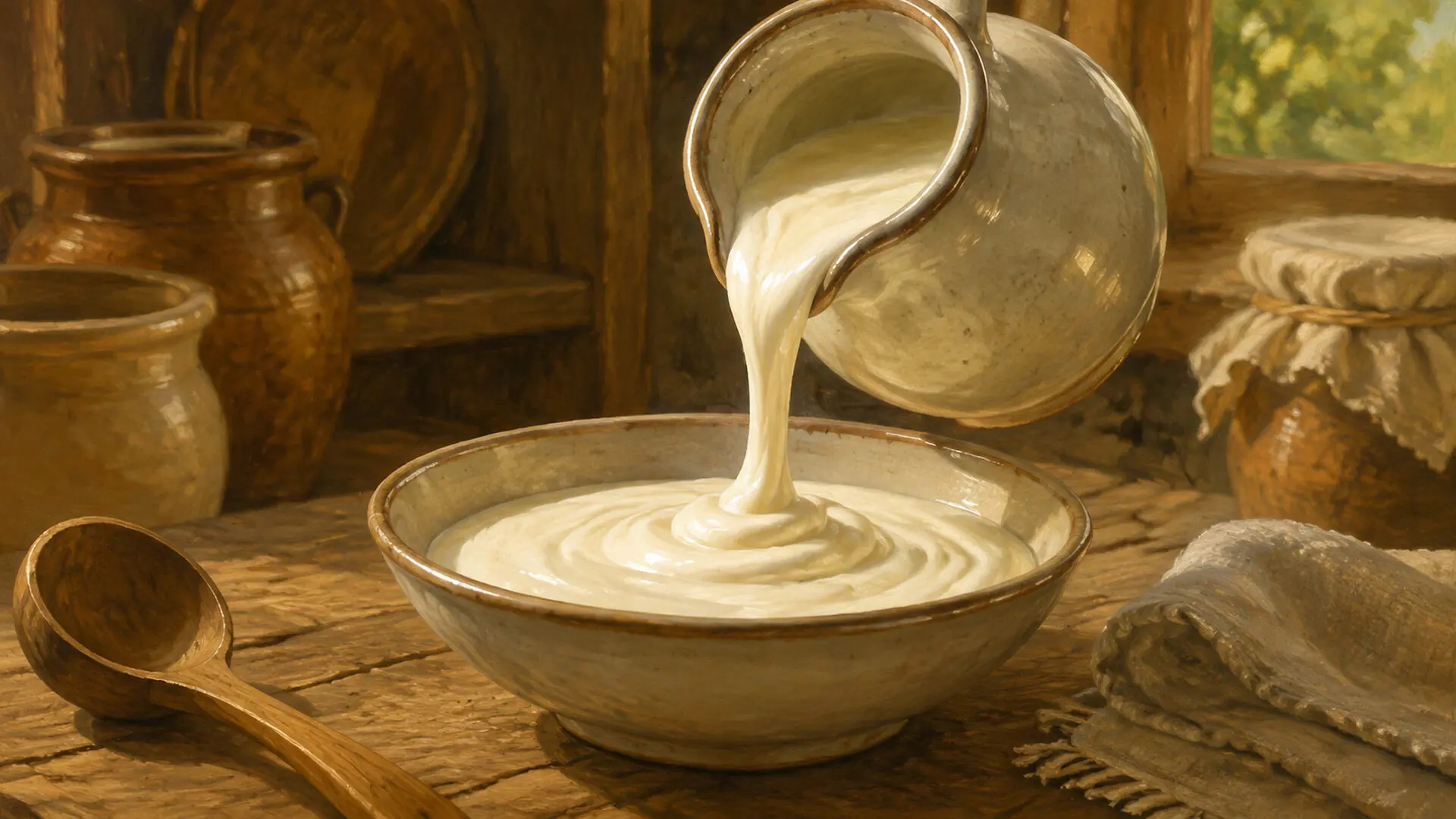
The fat-rich fluid portion of milk obtained by physical separation. Different cream products contain substantially different amounts of milkfat.
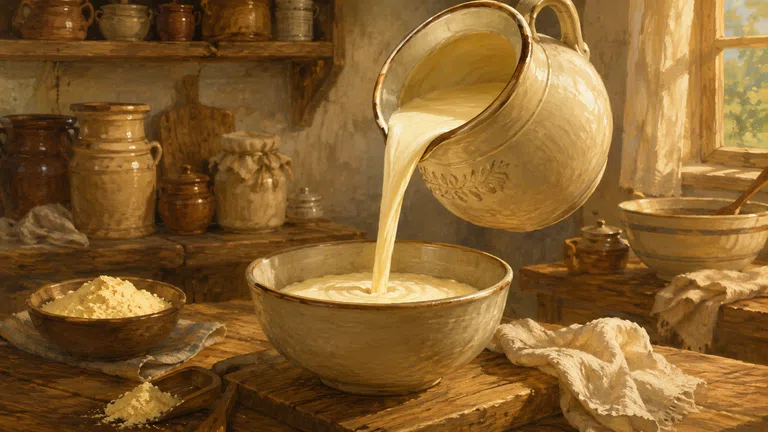
Cream is the high-fat layer that rises to the surface of whole cow milk when it is left to stand undisturbed, due to the lower density of milk fat compared to the watery portion of milk (skim milk). Before homogenisation became standard in commercial dairy processing, cream naturally separated from milk over several hours. Today, cream is industrially separated from milk by centrifugation, which accelerates the separation process within seconds. Cream has been a prized culinary ingredient across European, South Asian, and Middle Eastern cuisines for thousands of years.
Different cream products are defined by their fat content, which varies by country and regulatory standards. In general terms, single cream (light cream) contains approximately 18–20% fat; whipping cream 30–35% fat; double cream (heavy cream) 48% fat or more. The higher the fat content, the better a cream whips — low-fat creams cannot be whipped because they do not have enough fat globules to trap air bubbles and hold their structure.
The Codex Alimentarius standard for cream (CXS 288-1976) defines cream as the milk product comparatively rich in fat, in the form of an emulsion of fat-in-skimmed-milk, which may be obtained by separation from milk. Fat content requirements vary by country: UK double cream must contain at least 48% fat, while US heavy cream requires at least 36% fat. Cream products may be pasteurised, ultra-pasteurised, or processed into long-life UHT cream for extended shelf life.
Cream nutrition varies significantly by fat content. For heavy cream / double cream (per 15ml / 1 tablespoon):
Cream is very high in fat and calories relative to its volume. It is very low in protein and lactose compared to whole milk. The low lactose content means cream is usually tolerated by people with mild lactose intolerance. Cream contains fat-soluble vitamins A, D, E, and K in proportion to its fat content.
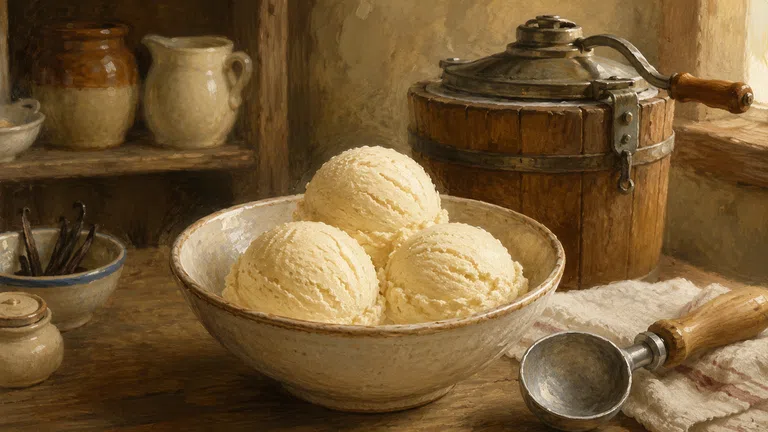
Cream is one of the most important culinary ingredients in European cooking. Heavy cream is whipped into chantilly cream for desserts and cakes, stirred into pasta sauces (carbonara, Alfredo), folded into risotto, and used as the base for crème brûlée, panna cotta, and ice cream. Single cream is poured over desserts and stirred into coffee. Crème fraîche (a cultured cream product) is used in French cooking as a sauce enricher that does not split when heated. Soured cream is used in Central and Eastern European cuisines as a condiment and sauce ingredient.