Condensed Milk
CommonWorldwide
A concentrated sweet dairy product made by removing part of the water from milk and adding enough nutritive carbohydrate sweetener to help preserve the finished food.

A concentrated sweet dairy product made by removing part of the water from milk and adding enough nutritive carbohydrate sweetener to help preserve the finished food.
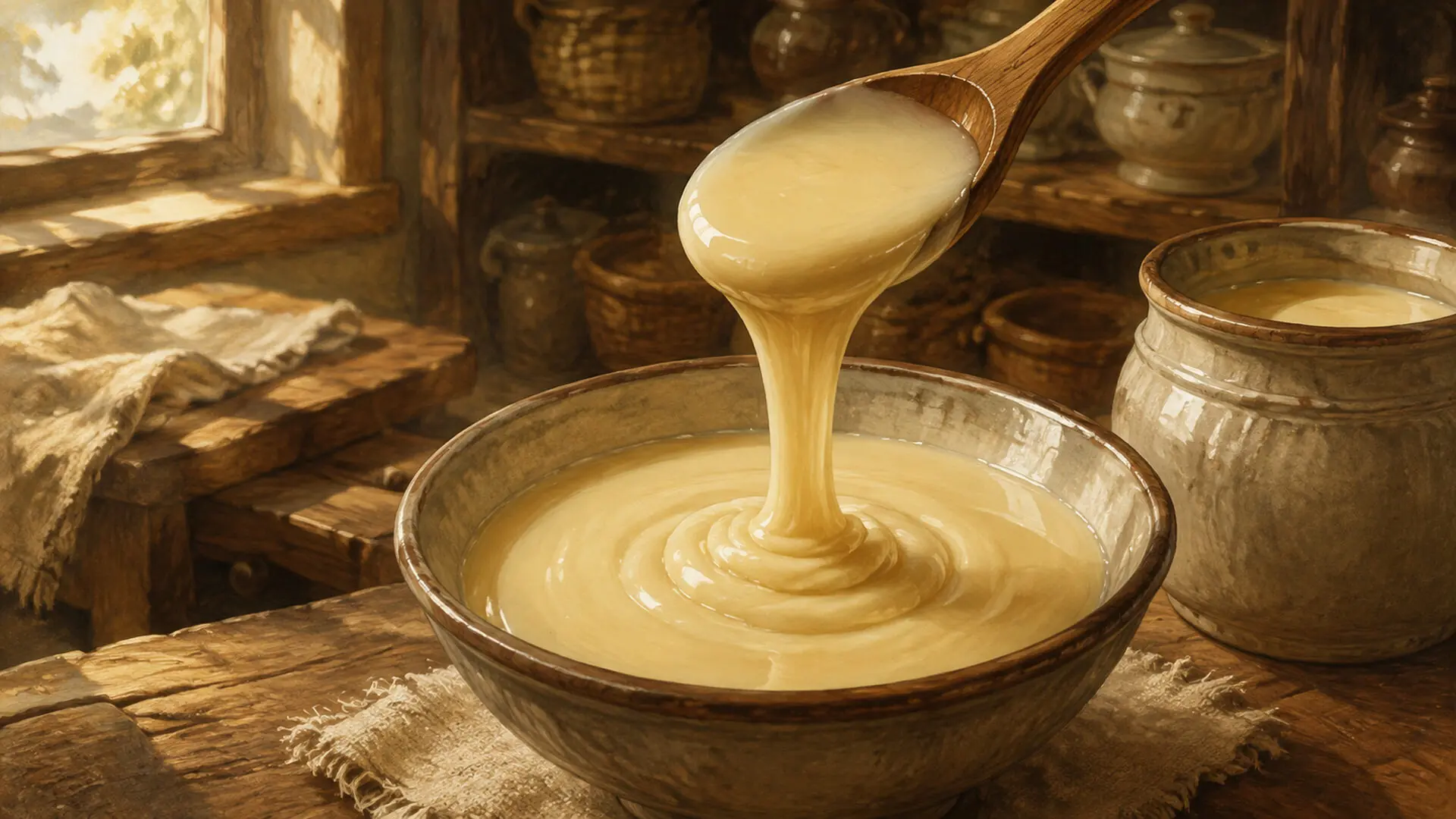
Condensed milk is a shelf-stable dairy product made by removing approximately 60% of the water from cow milk and adding sugar, producing a thick, sweet, caramel-coloured syrup. It is almost always sweetened — the term "sweetened condensed milk" is the standard product, and it is this sugar content that preserves it without refrigeration. The process was developed commercially by Gail Borden in the United States in the 1850s as a way to preserve milk for long-term storage, and it was widely used to feed soldiers and civilians during the American Civil War.
To make condensed milk, whole milk is first pasteurised and then heated under vacuum at a reduced temperature, which allows water to evaporate without scorching the milk or caramelising the sugar excessively. Sugar (typically sucrose) is added at a ratio that results in approximately 40–45% sugar in the final product. The high sugar concentration, combined with the low water activity, prevents microbial growth and allows the product to be stored for months or even years in sealed cans without refrigeration.
The Codex Alimentarius standard for sweetened condensed milk (CXS 282-1971) specifies a minimum milk fat content of 8% and minimum milk solids content, with added sucrose as the primary preservative. Condensed milk is commercially produced by many of the world's largest dairy companies and is widely exported from major dairy-producing countries to markets in Southeast Asia, Latin America, and the Middle East.
Sweetened condensed milk is very high in sugar and calories. Per 2 tablespoons (38g):
Condensed milk is extremely calorie-dense and high in sugar. It retains the protein and calcium of whole milk but concentrates these along with the added sugar. It is not suitable for people with lactose intolerance or dairy allergies, and should be consumed in small quantities due to its very high sugar content.
Condensed milk is used in desserts and baking worldwide. In Southeast Asia, it is stirred into strong coffee and tea (Vietnamese cà phê sữa đá uses it as a sweetener). In Latin America, it is boiled in the can to produce dulce de leche — a thick caramel sauce. In the UK, it is used in fudge and tablet. In India, it is used in mithai (sweets) and baked goods. It is a key ingredient in key lime pie, banoffee pie, and many no-churn ice cream recipes.