Ghee
CommonSouth Asia, the Middle East, and worldwide
A highly concentrated dairy-fat product obtained from milk, cream, or butter by processes that remove nearly all water and nonfat solids.
A highly concentrated dairy-fat product obtained from milk, cream, or butter by processes that remove nearly all water and nonfat solids.
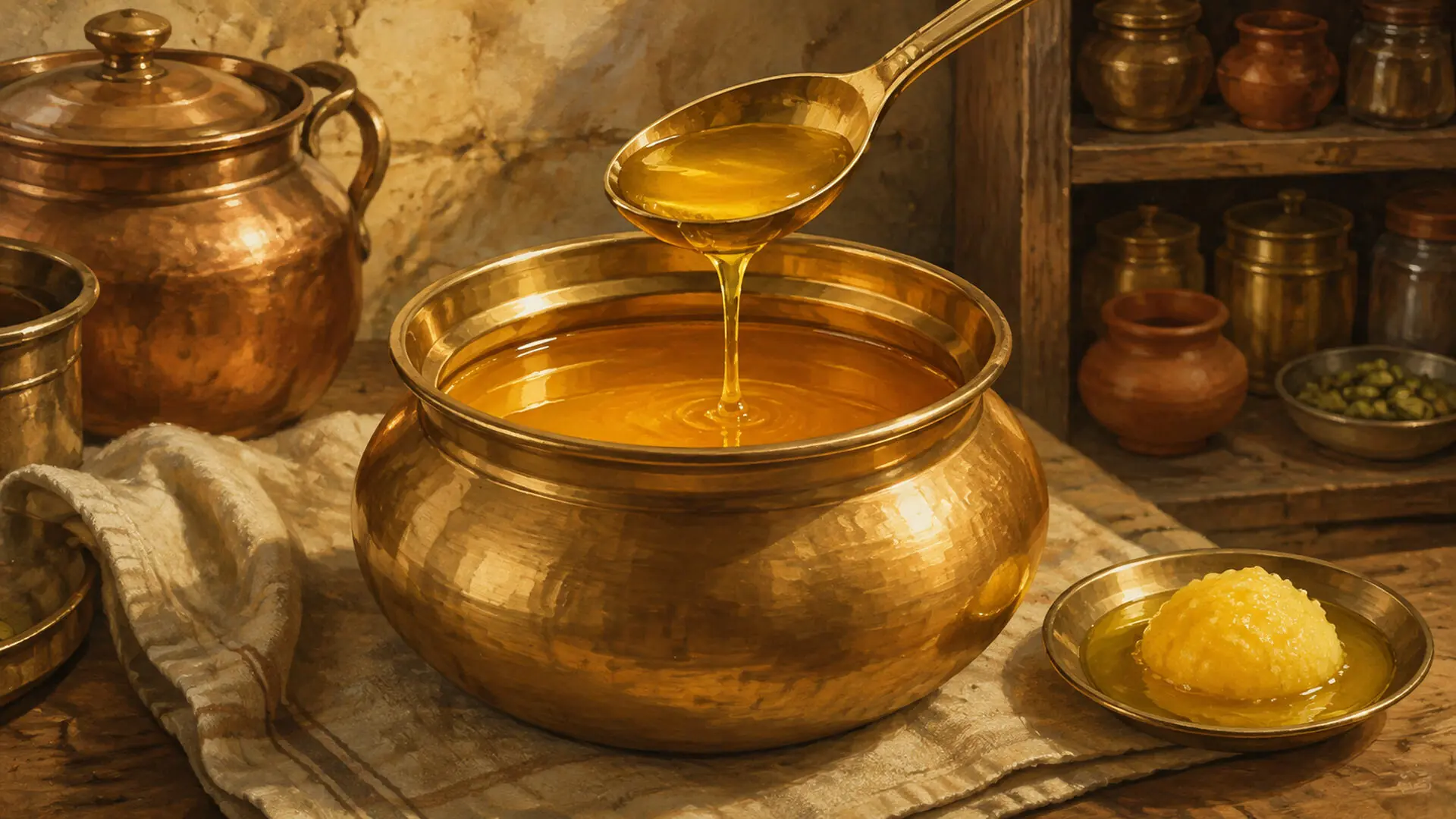
Ghee is a form of clarified butter that has been heated further to evaporate all remaining moisture and allow the milk solids to brown and then be filtered out, producing a pure, golden fat with a distinctive nutty, toasted flavour. It has been produced and used in South Asian cuisine and culture for at least 3,000–4,000 years, with references appearing in ancient Sanskrit texts including the Rigveda, where it was described as a sacred substance associated with purity and offerings to fire. Ghee holds a central place in Ayurvedic medicine, where it is considered a deeply nourishing food with digestive and healing properties.
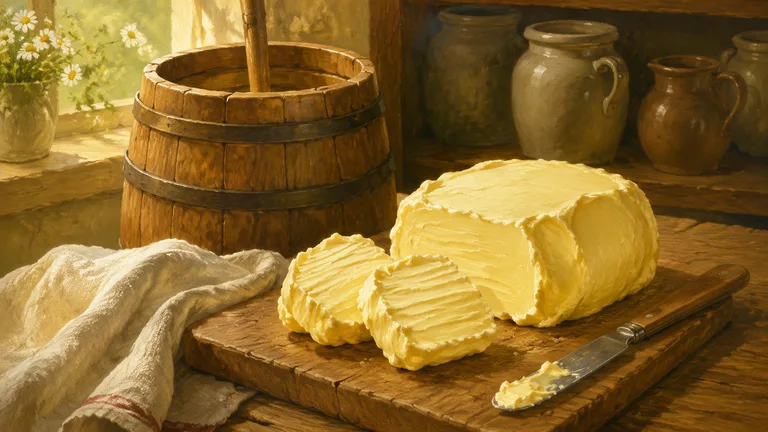
To make ghee, butter is slowly simmered in a pan until the water evaporates (producing foam and bubbling), the milk solids separate and settle to the bottom where they toast to a golden-brown colour imparting a characteristic nutty aroma, and the remaining pure fat is carefully poured off and filtered through a fine cloth or strainer. The resulting ghee is a translucent, deep golden liquid that solidifies into a grainy, spreadable texture when cooled. The removal of water and milk solids gives ghee a much higher smoke point than butter (approximately 250°C vs 150–170°C for butter) and an extended shelf life — traditionally stored at room temperature for months.
The Codex Alimentarius standard for ghee (CXS 280-1973) defines it as a product made exclusively from milk, cream, or butter by a process which results in almost total removal of moisture and solids-not-fat, with a characteristic cooked or nutty flavour and a granular or smooth texture. It must contain a minimum of 99.6% milk fat. Ghee is the primary cooking fat in Indian, Pakistani, Bangladeshi, Sri Lankan, and Nepali cuisines, and is also traditionally produced in parts of East Africa and the Middle East.
Ghee is almost entirely fat, with virtually no protein, lactose, or water. Per 1 tablespoon (14g):
Because the milk solids and water are removed, ghee contains essentially no lactose or milk proteins — making it suitable for most people with lactose intolerance and potentially tolerable for some with mild cow milk protein sensitivity (though those with serious dairy allergies should exercise caution). Ghee is a source of fat-soluble vitamins A, D, E, and K, and grass-fed ghee contains higher levels of vitamin K2 and CLA (conjugated linoleic acid).
In South Asian cooking, ghee is used for tempering (tadka) — a technique where whole spices are briefly fried in hot ghee to release their aromatic oils before being added to dal, curries, or rice. It is drizzled over steamed rice, dal, and rotis to add richness. It is the primary fat used in making Indian sweets (mithai) including halwa, kheer, and ladoo. In Ayurvedic practice, ghee is consumed medicinally — taken plain, mixed with herbs, or used in nasal and oil-pulling treatments.