Cheese
CommonWorldwide
A broad family of fresh or ripened dairy foods produced principally through coagulation of milk proteins and separation of some of the liquid whey.
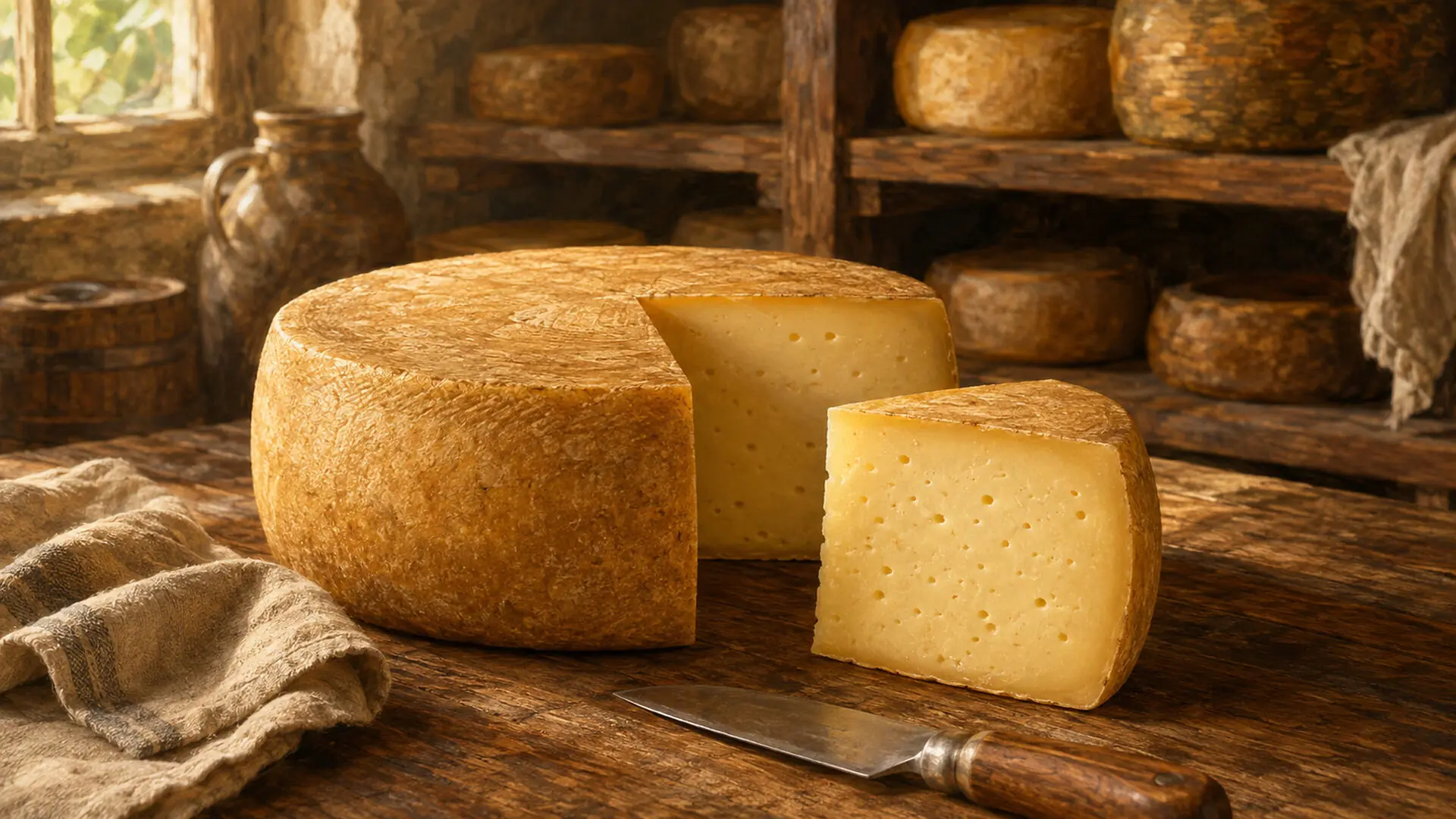


A broad family of fresh or ripened dairy foods produced principally through coagulation of milk proteins and separation of some of the liquid whey.
Cheese is a dairy product produced by coagulating milk protein (casein) and separating the resulting solid (curds) from the liquid (whey). It is one of the oldest and most diverse processed foods in the world, with a history spanning at least 7,500 years — among the earliest evidence of cheesemaking includes residues found on pottery from ancient Poland dating to approximately 5,500 BCE. Cheese is produced from the milk of cows, goats, sheep, water buffalo, and other animals, and encompasses thousands of distinct varieties produced in every region of the world.
The cheesemaking process involves four fundamental steps: acidification (adding starter bacteria or acid to lower the pH of the milk), coagulation (adding rennet or another coagulant to form the curd), draining (separating whey from the curd), and ripening or ageing (allowing time and specific microorganisms to develop flavour, texture, and aroma). The extraordinary diversity of cheese — from soft fresh ricotta to hard aged Parmigiano-Reggiano, from pungent blue Roquefort to mild young cheddar — arises from variations in the source milk, starter cultures, ripening organisms, salting, pressing, and ageing conditions.
According to the Codex Alimentarius standard for cheese (CXS 283-1978), cheese is defined as the ripened or unripened soft, semi-hard, hard, or extra-hard product which may be coated, in which the whey protein to casein ratio does not exceed that of milk, obtained by coagulating whole, partially or fully skimmed milk. France alone produces over 1,000 named cheese varieties, and the European Union protects hundreds of traditional cheeses with Protected Designation of Origin (PDO) or Protected Geographical Indication (PGI) status.
Cheese nutrition varies enormously by type. As a general guide for a hard cheese like cheddar (28g / 1 oz serving):
Cheese is an excellent source of calcium and protein. Aged hard cheeses contain very little lactose (it is consumed by bacteria during ripening), making them well-tolerated by many people with lactose intolerance. Soft fresh cheeses like ricotta retain more lactose. Cheese is typically high in saturated fat and sodium, though the extent varies significantly by type and whether salt is added.
Cheese is one of the most culinarily versatile dairy products. Hard cheeses such as Parmigiano-Reggiano and Pecorino Romano are grated over pasta, soups, and risotto. Mozzarella melts on pizza and in pasta dishes. Brie and Camembert are served on cheese boards with fruit and bread. Cheddar and Gruyère melt into sauces, gratin dishes, and toasted sandwiches. Fresh cheeses like ricotta and mascarpone are used in desserts including cheesecake and tiramisu. Blue cheeses such as Roquefort and Gorgonzola appear in salads, dressings, and savoury pastries.