Kefir
CommonTraditionally associated with the Caucasus; now produced internationally
A fermented milk beverage produced with kefir grains or related cultures containing a mixed microbial community of bacteria and yeasts.
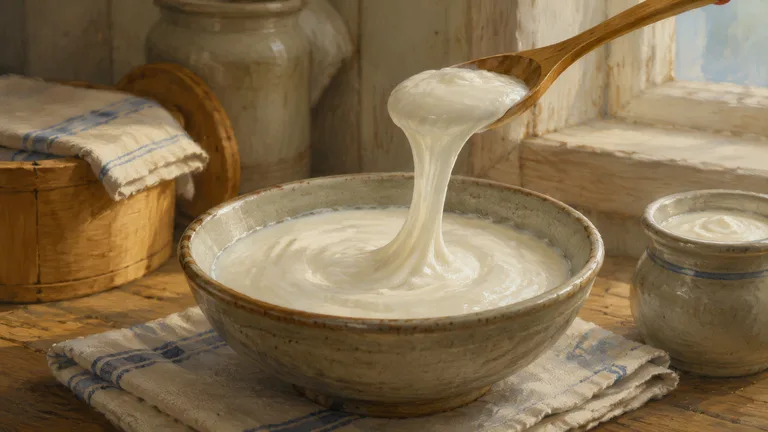
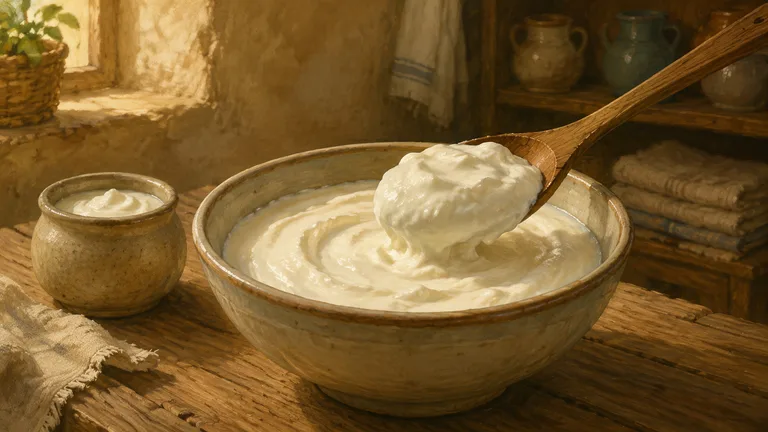
A fermented milk beverage produced with kefir grains or related cultures containing a mixed microbial community of bacteria and yeasts.
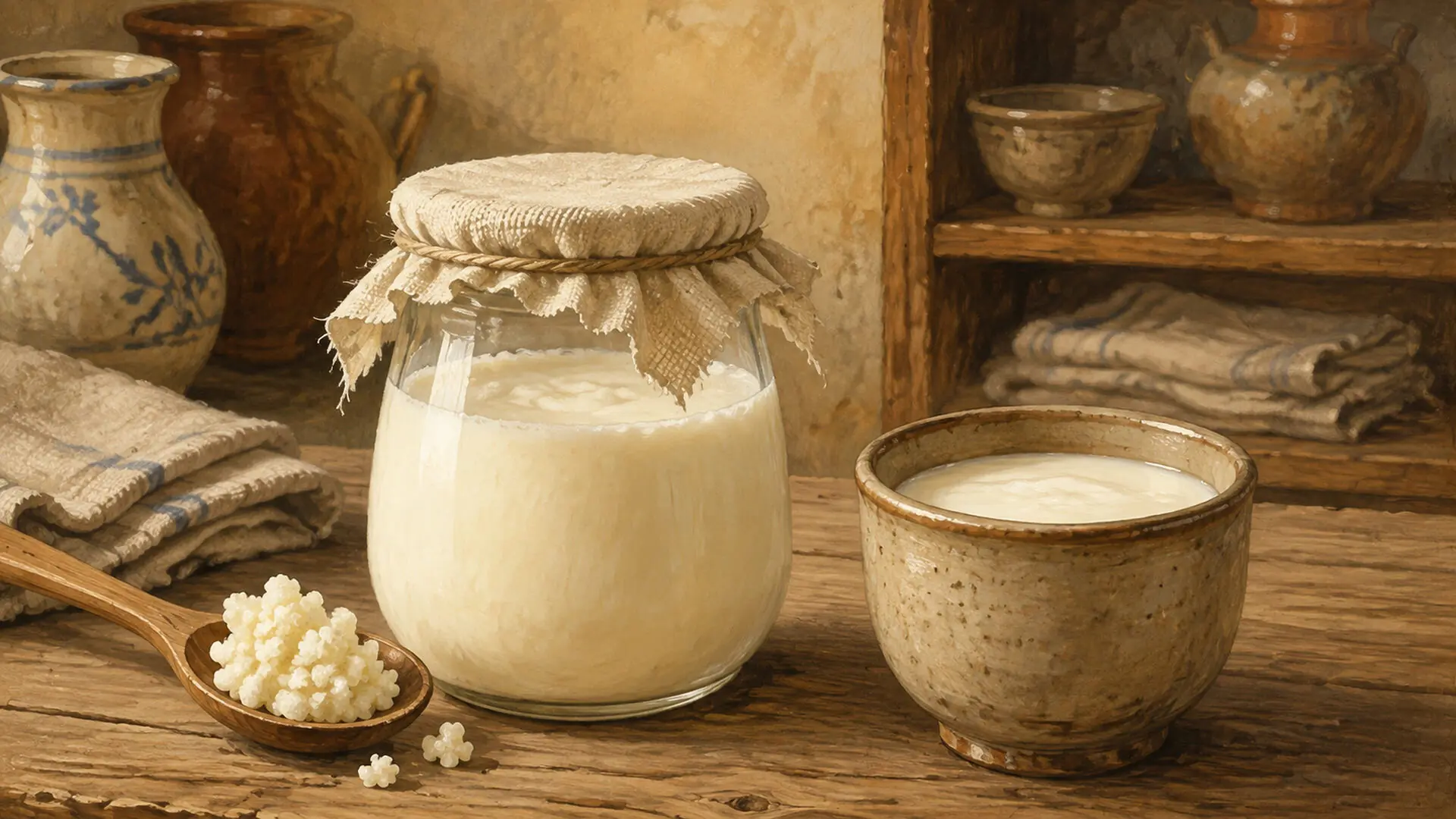
Kefir is a fermented milk drink produced using kefir grains — complex, symbiotic communities of lactic acid bacteria, acetic acid bacteria, and yeasts embedded in a polysaccharide matrix. Unlike most fermented dairy products, which are made using defined bacterial starter cultures, kefir is produced by adding kefir grains directly to milk and allowing the microorganisms within the grains to ferment the milk over 12–24 hours. The result is a tangy, slightly effervescent, mildly alcoholic drink with a much more complex microbial composition than yogurt or filmjölk.
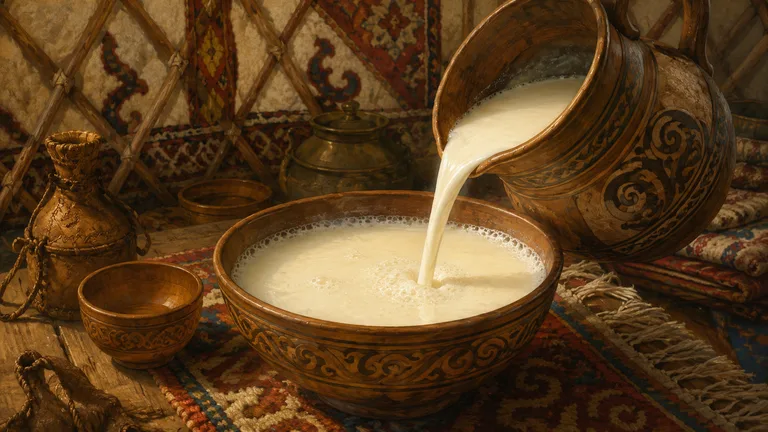
Kefir originated in the Caucasus Mountains — the region encompassing modern-day Georgia, Armenia, Azerbaijan, and parts of southern Russia — where it has been produced and consumed for centuries, possibly millennia. The name likely derives from the Turkish word "keyif" (pleasure or good feeling) and is linked to legends of the Prophet Muhammad gifting the grains to Orthodox Christians of the Caucasus. Kefir grains were kept as closely guarded family secrets and passed down through generations; their spread to the wider world occurred primarily in the early 20th century when Russian scientists obtained grains and began commercial production.
Kefir grains ferment both lactic acid (through bacterial activity) and a small amount of ethanol (through yeast activity), giving traditional kefir a slight fizz and a very low alcohol content (typically 0.5–2% ABV). Commercial kefir produced in most Western markets is often made using defined liquid starter cultures that produce the kefir flavour profile without significant yeast activity, resulting in a product with little or no alcohol content. The Codex Alimentarius standard for fermented milks (CXS 243-2003) includes kefir as a category requiring specific microbial content and lactic acid bacteria from kefir grains or appropriate starter cultures.
Plain whole milk kefir (240ml / 1 cup) typically contains:
Kefir contains a significantly more diverse community of live microorganisms than yogurt — typically 30–50 different bacterial and yeast species compared to 2 in standard yogurt. Fermentation reduces lactose content, and many people with lactose intolerance report tolerating kefir well. Kefir is a good source of calcium, protein, vitamin K2, B vitamins, and magnesium.
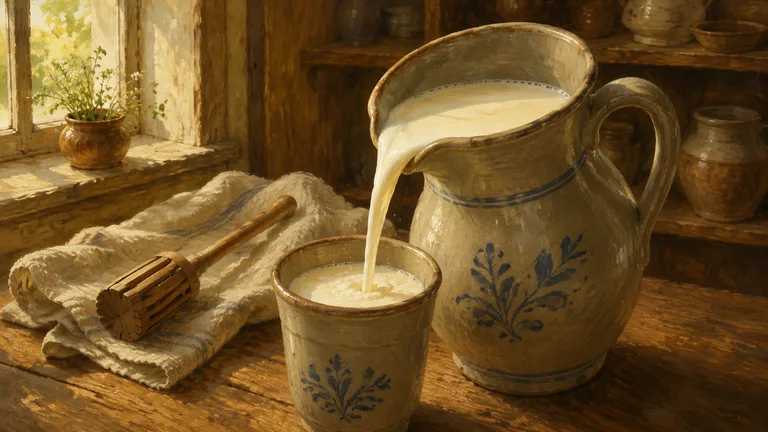
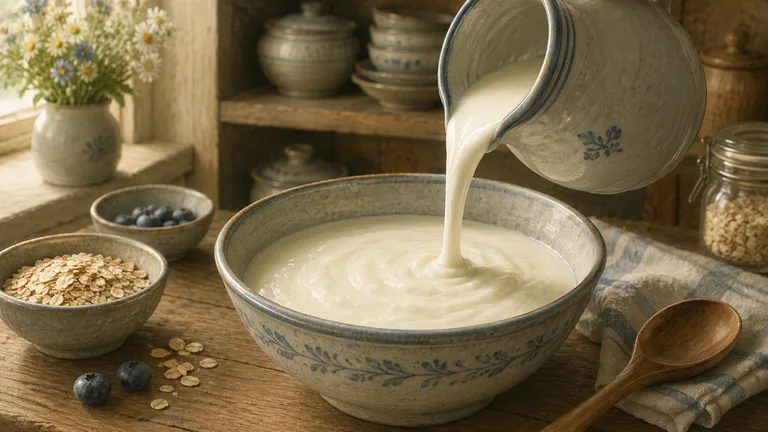
Kefir is most commonly drunk straight as a fermented beverage, either plain or flavoured. In Russia and Eastern Europe, it is a staple everyday drink consumed at any time of day. It is used in smoothies to add a tangy, probiotic-rich base. In baking, kefir functions like buttermilk — reacting with bicarbonate of soda to leaven pancakes, muffins, and quick breads. It can be used as a marinade for meat (the acids tenderise the proteins, similar to yogurt in tandoori dishes). Strained kefir (kefir cheese) can be used like cream cheese or labneh.